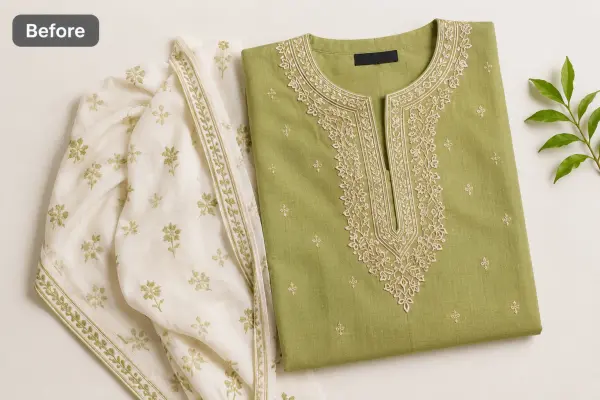
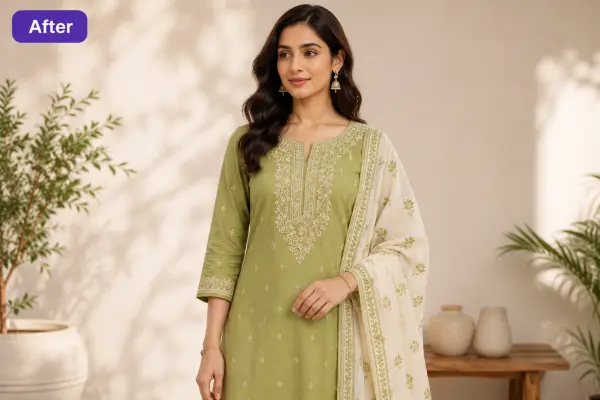
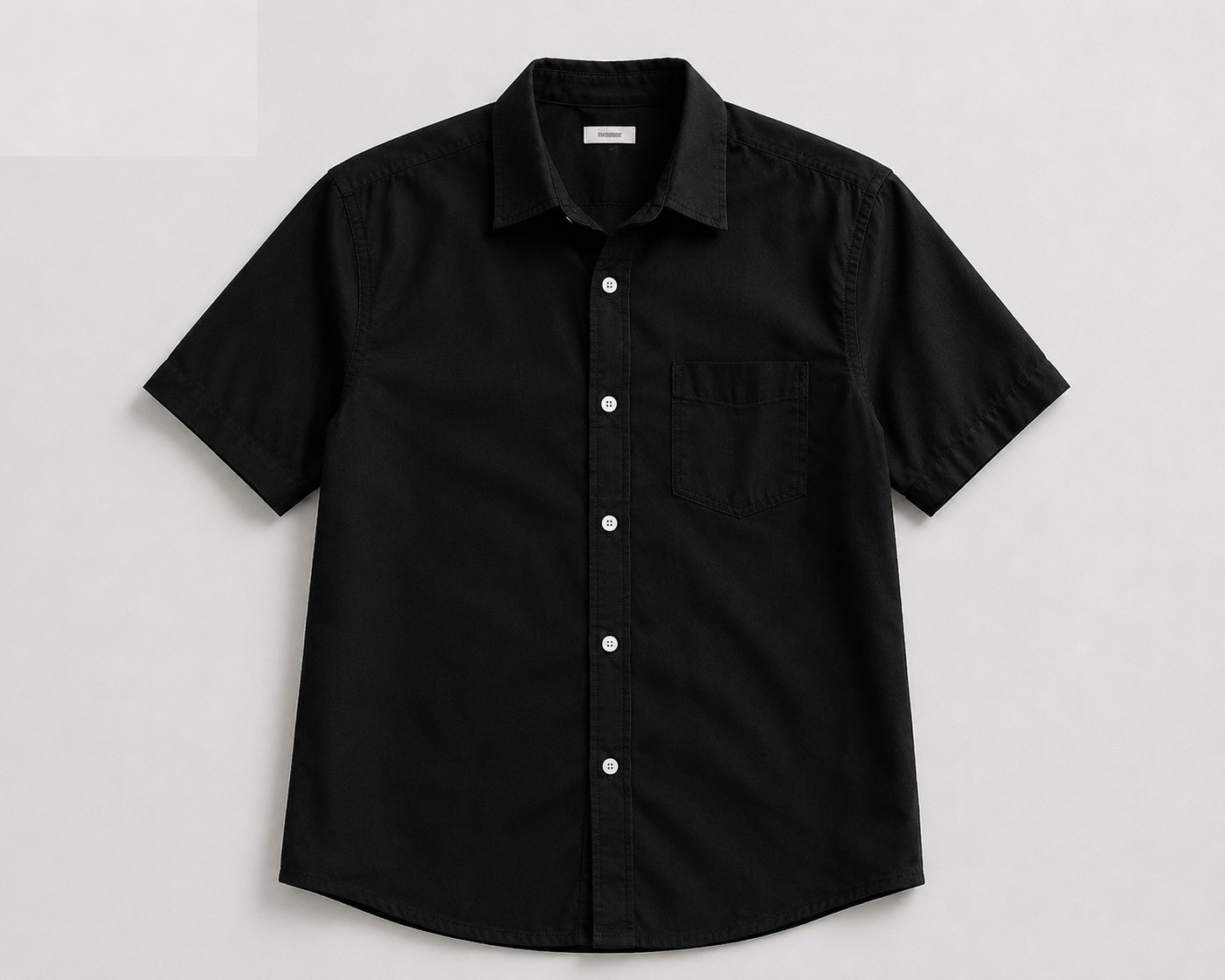
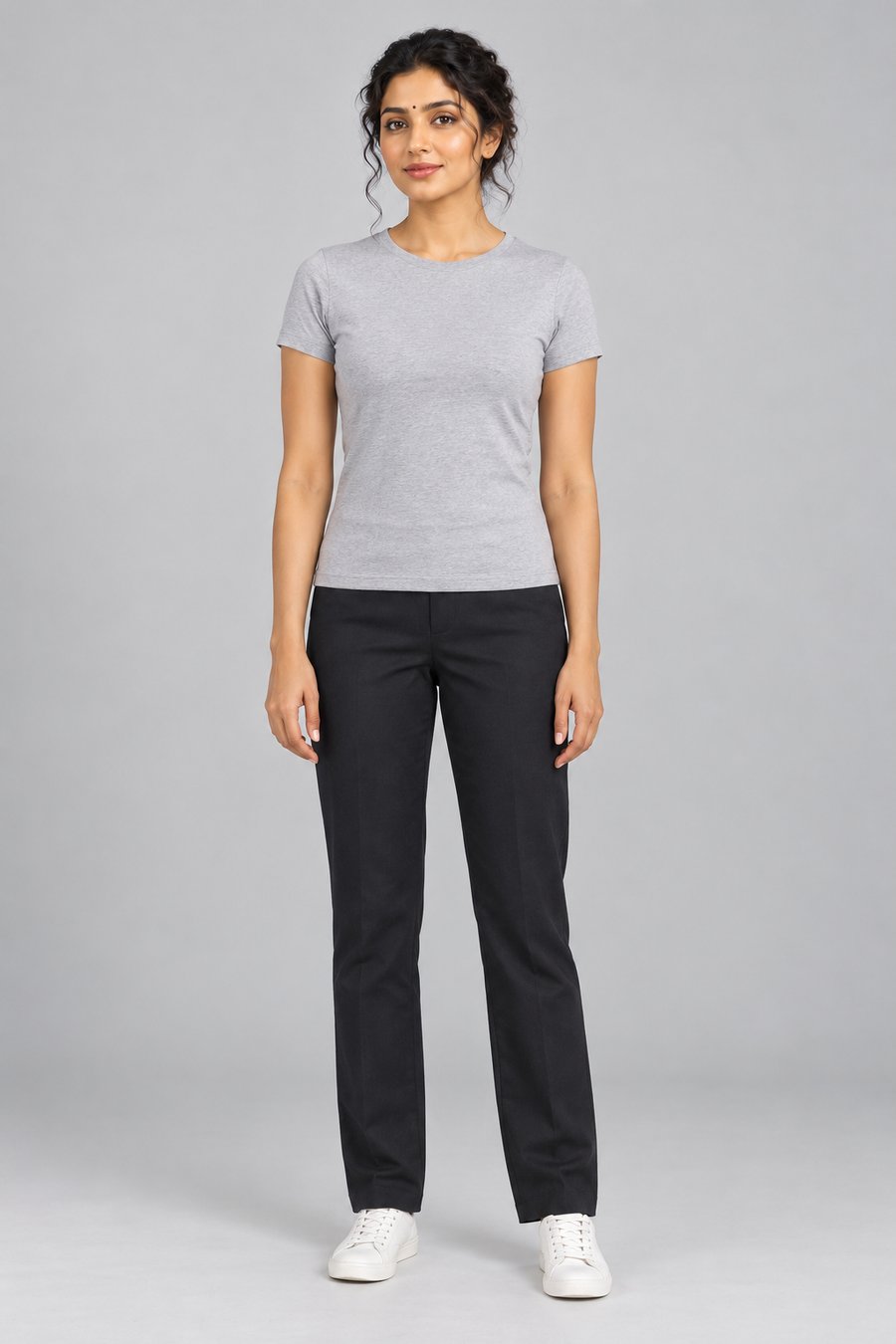
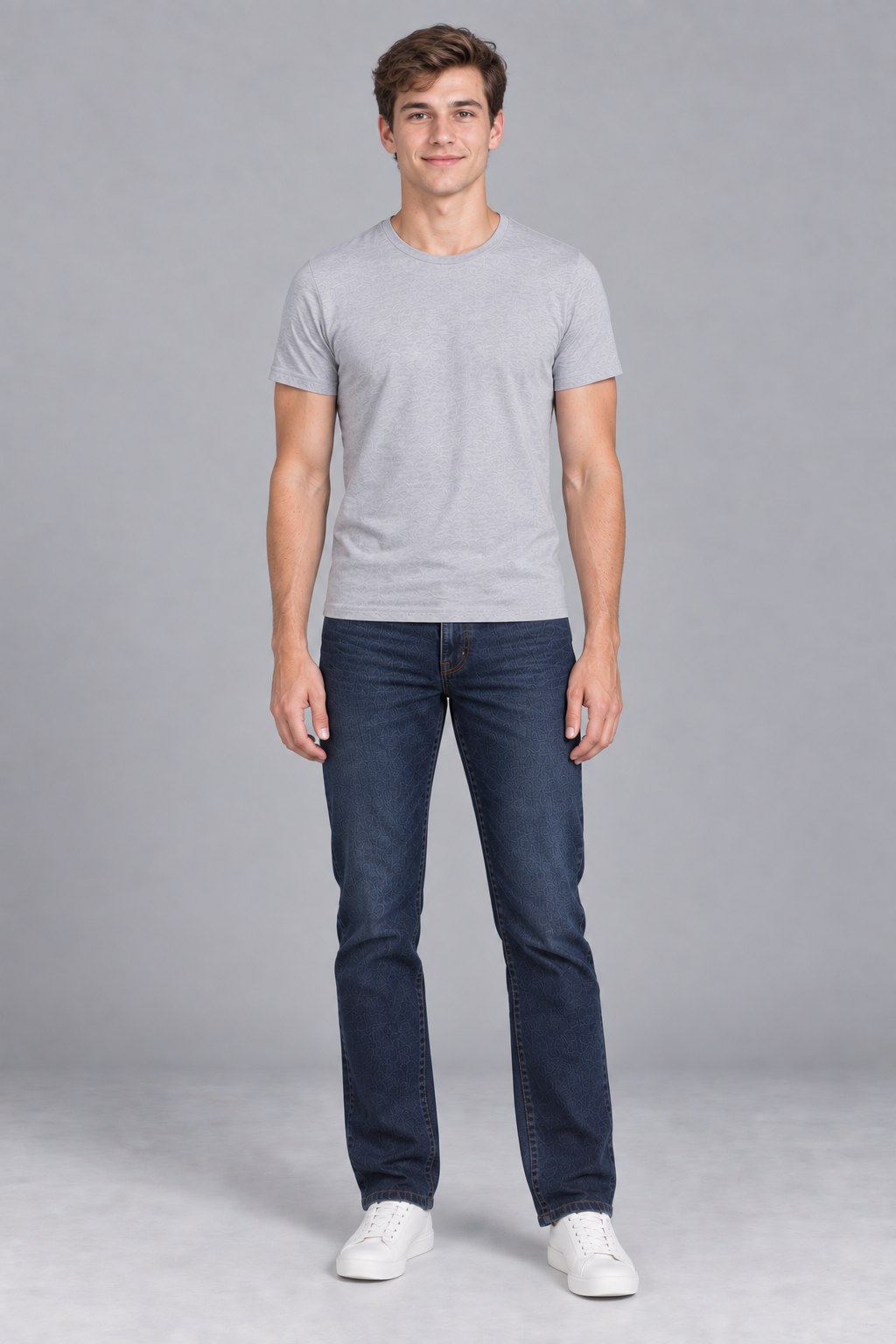
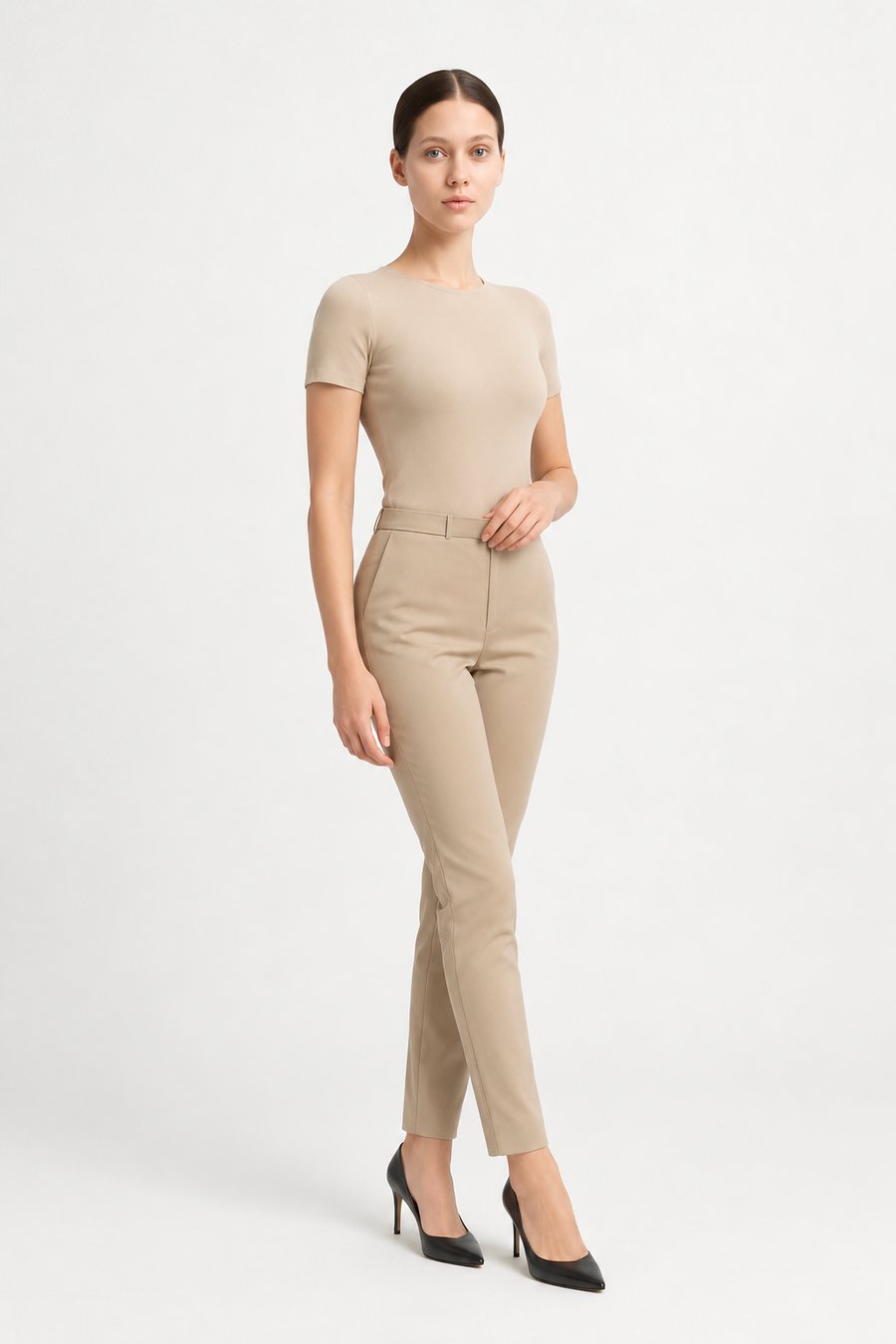
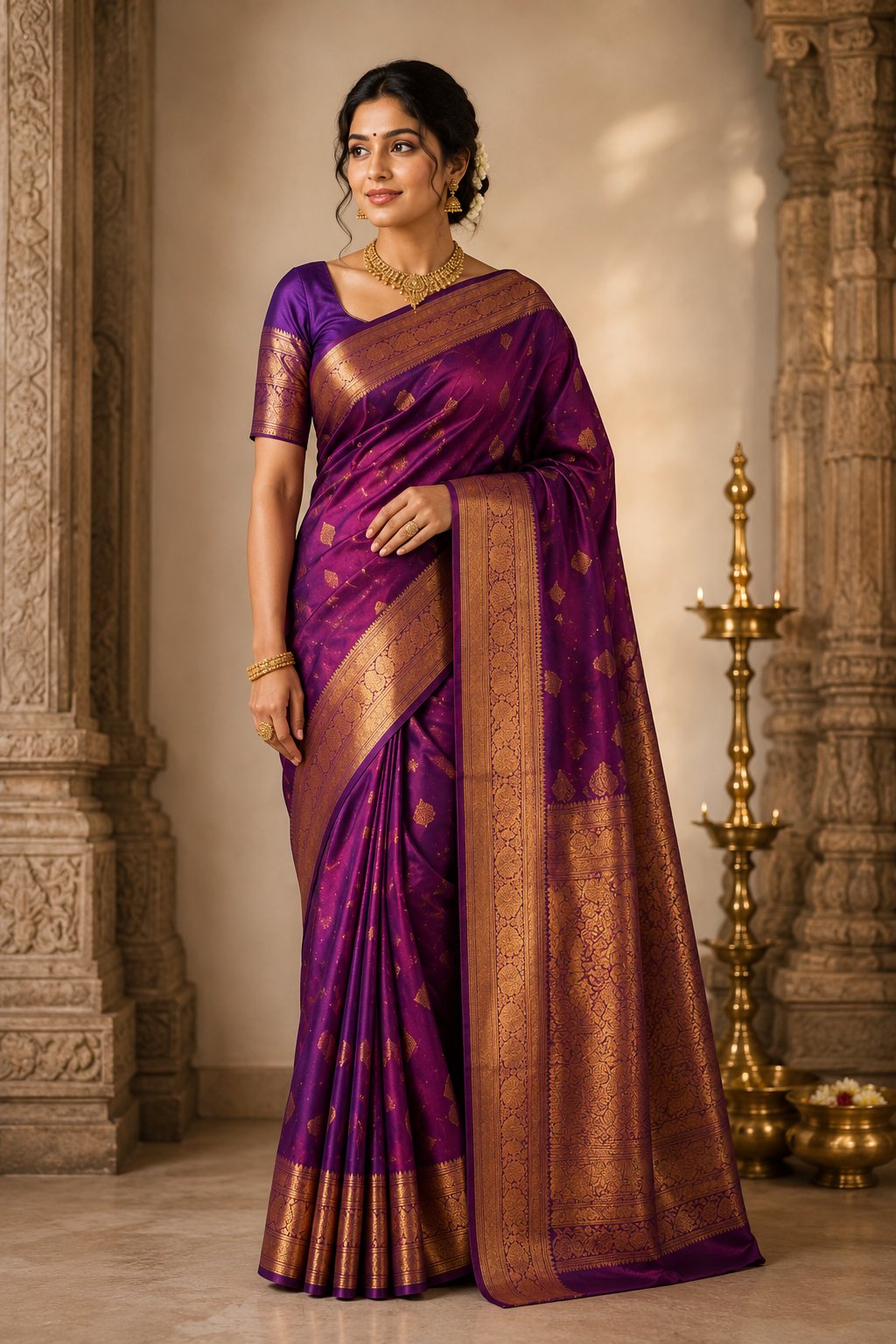
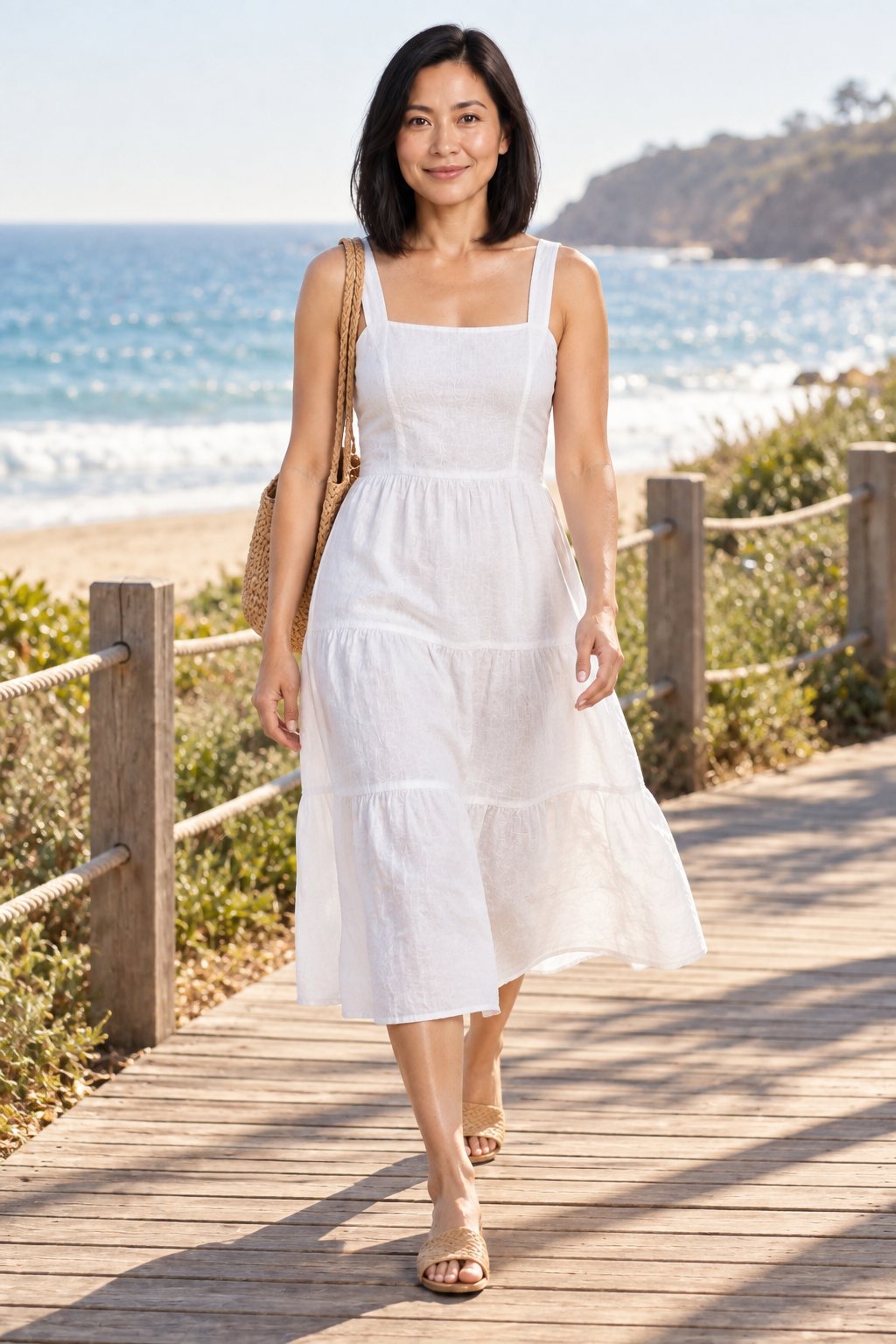
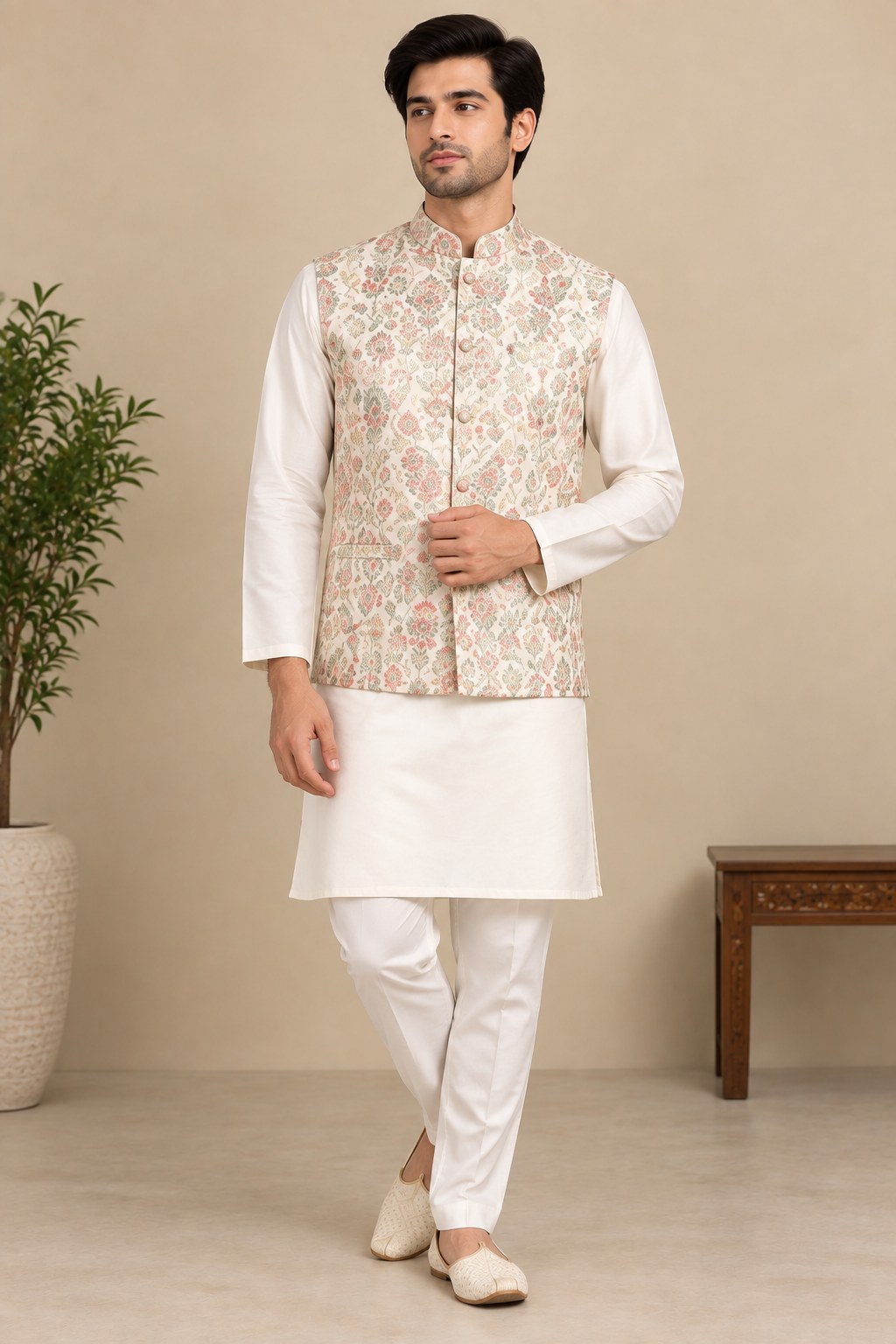
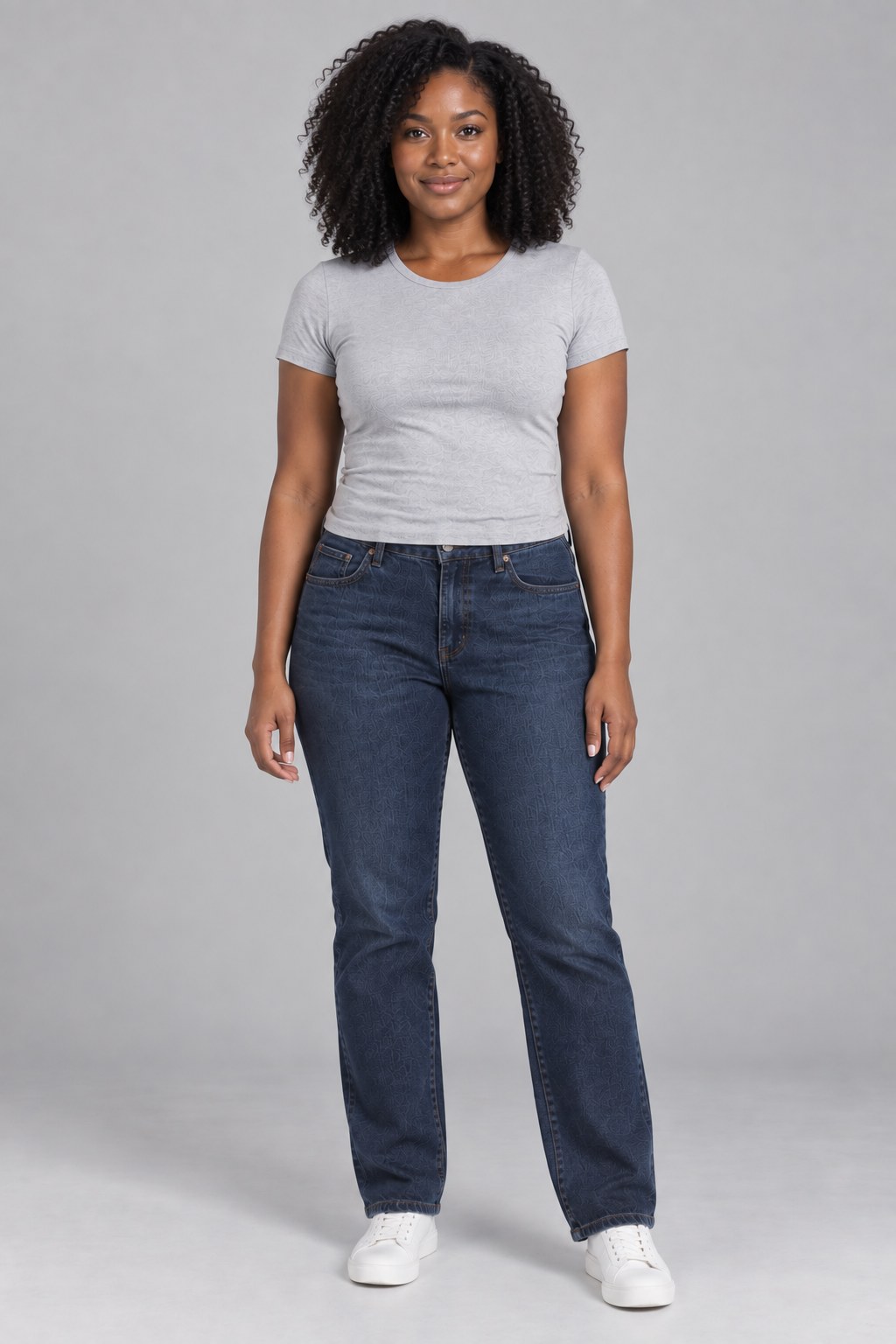
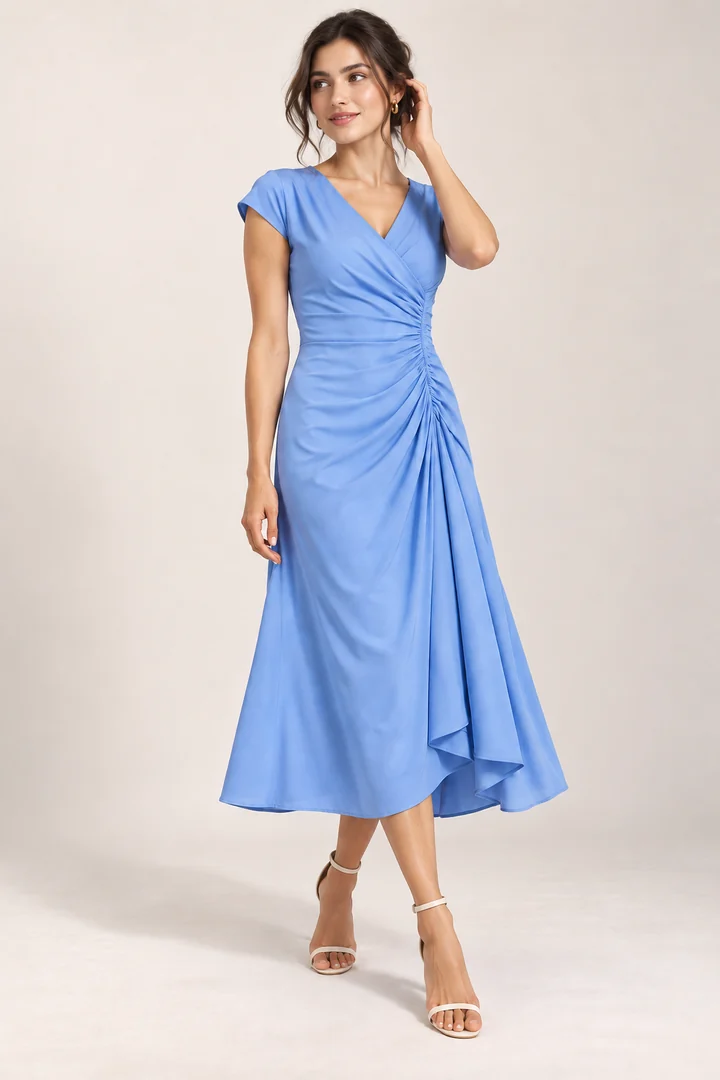
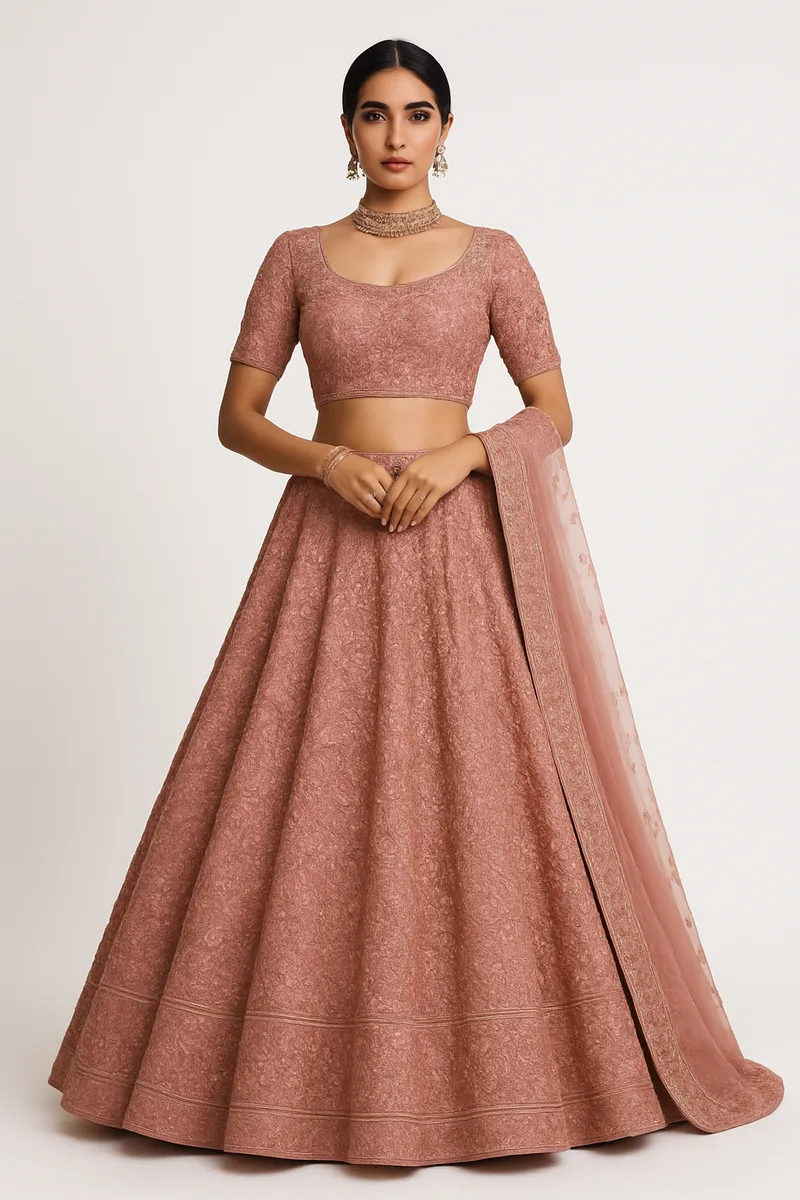
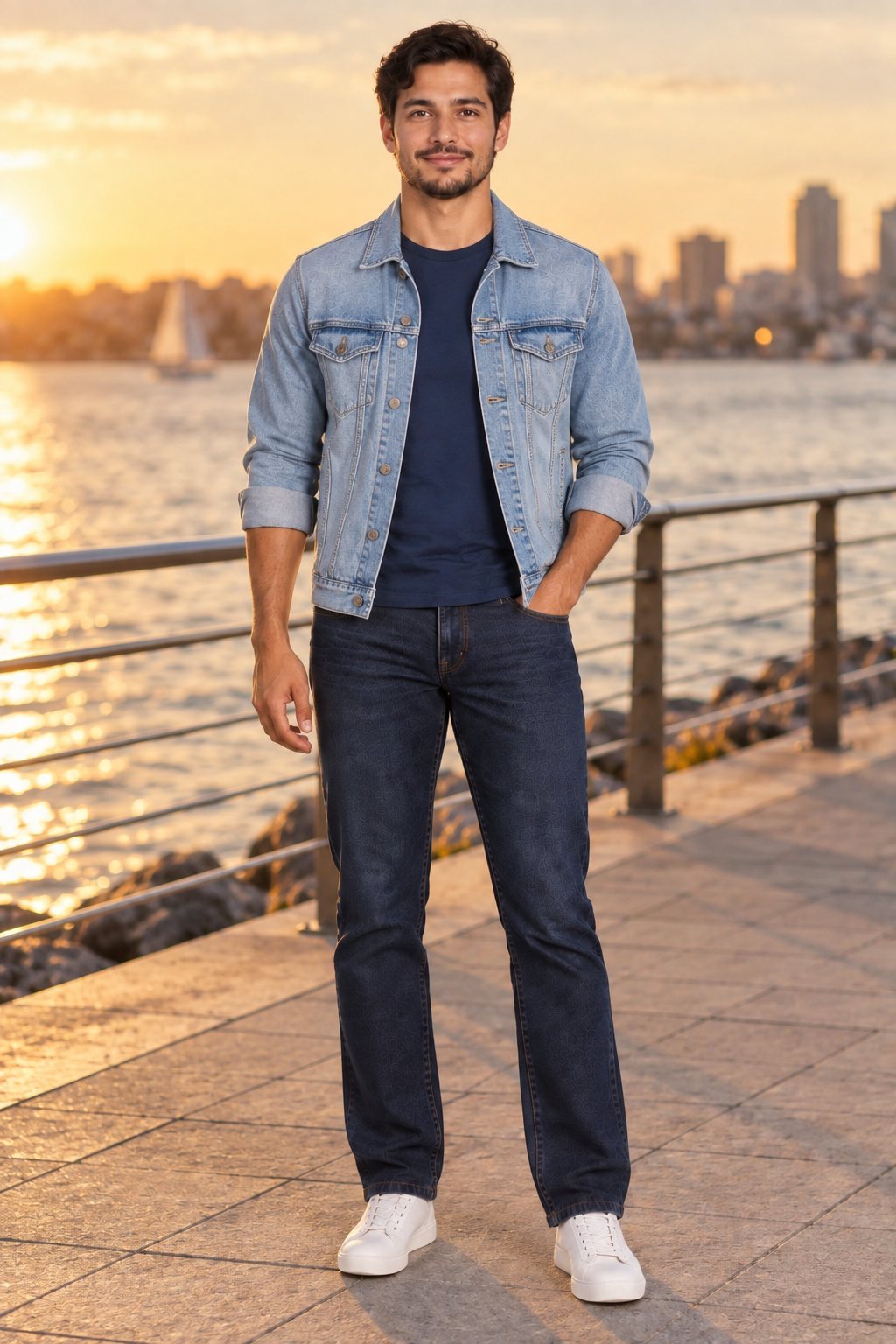
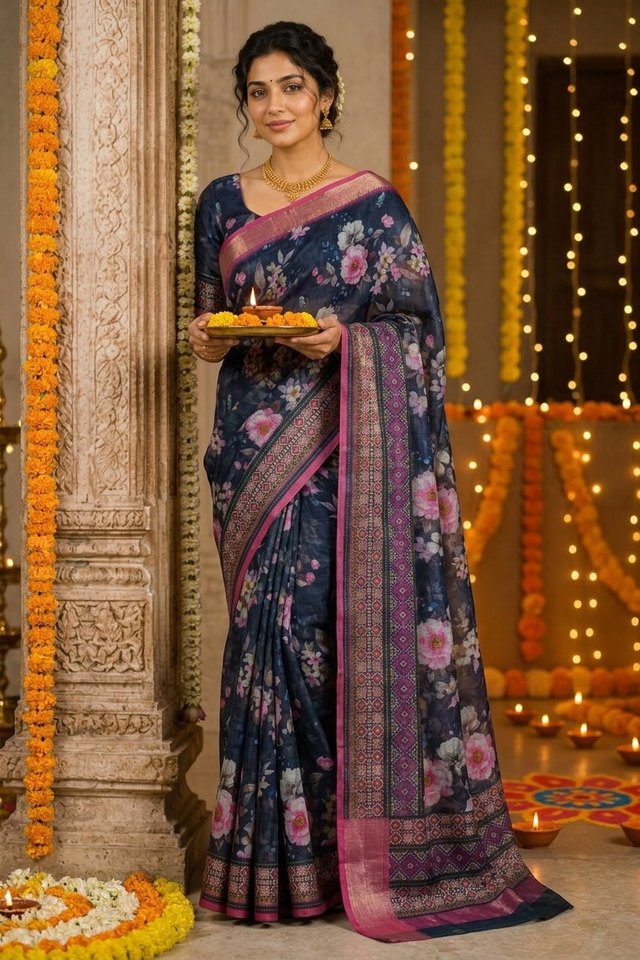
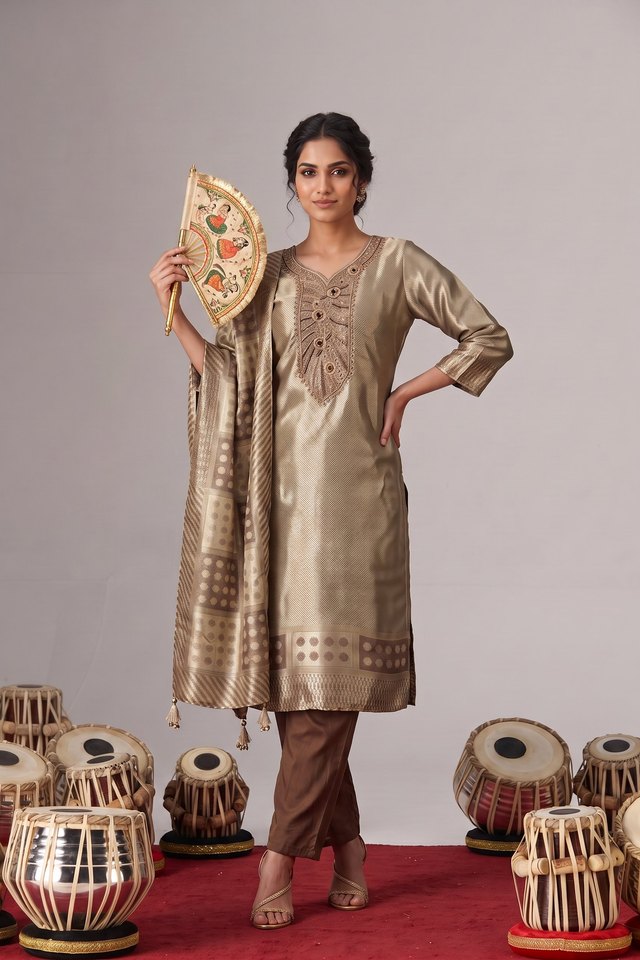
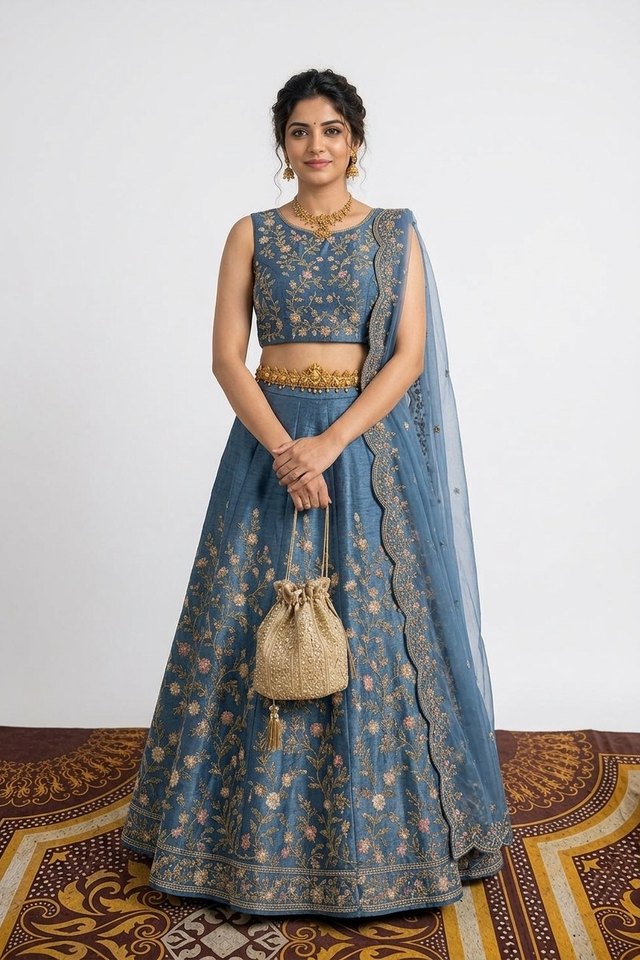
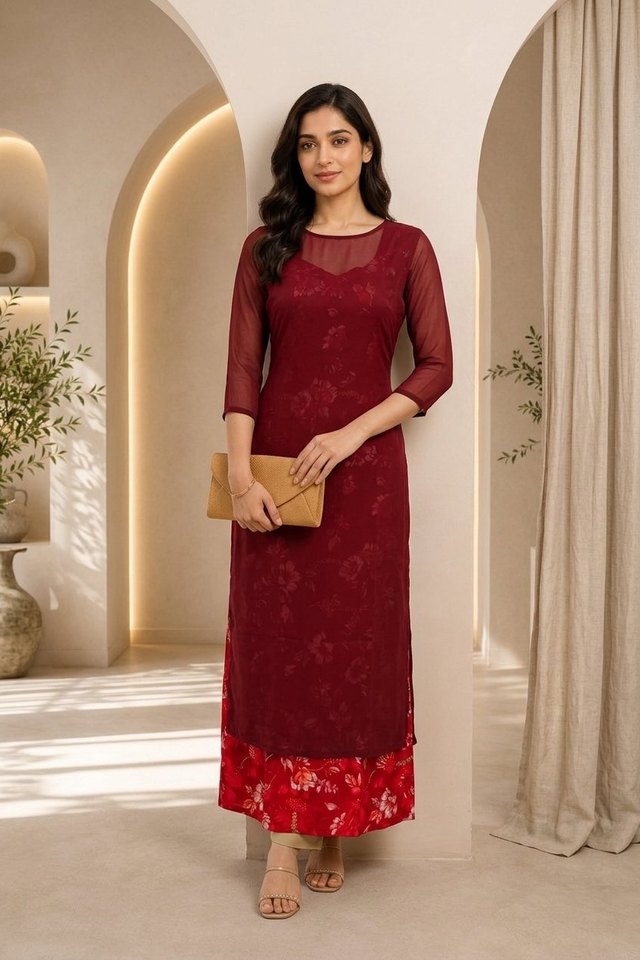
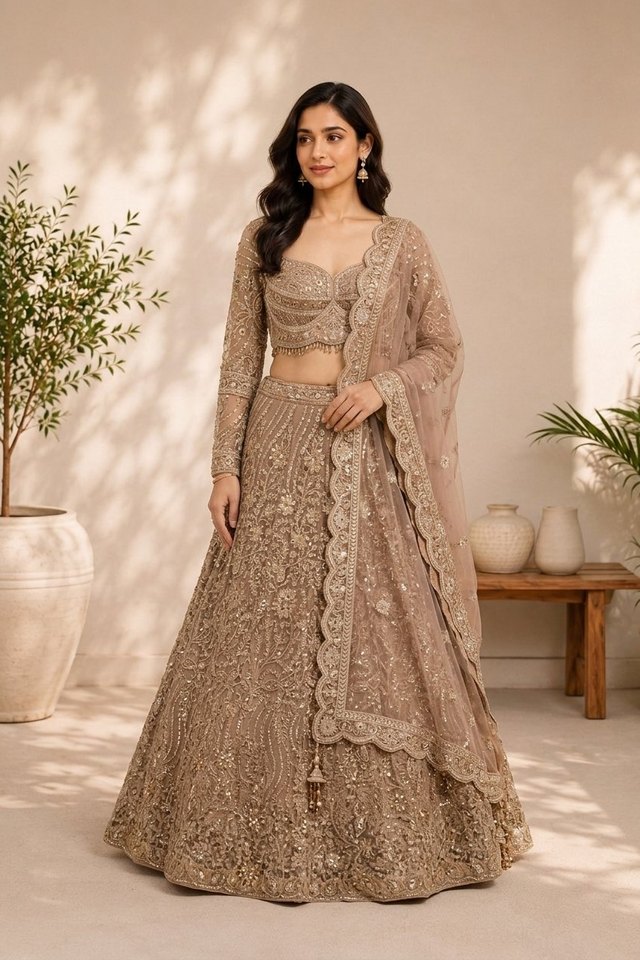
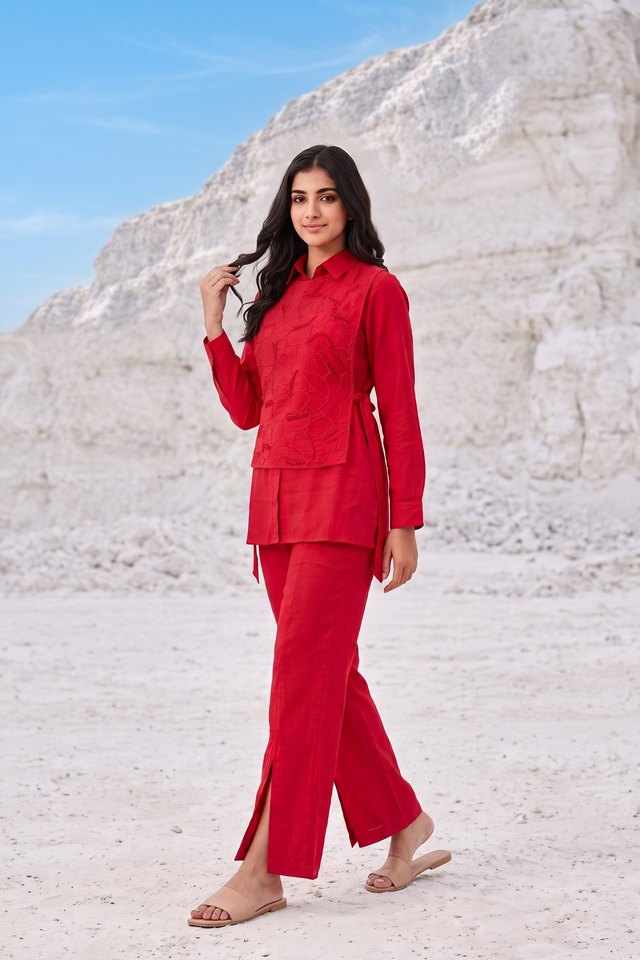
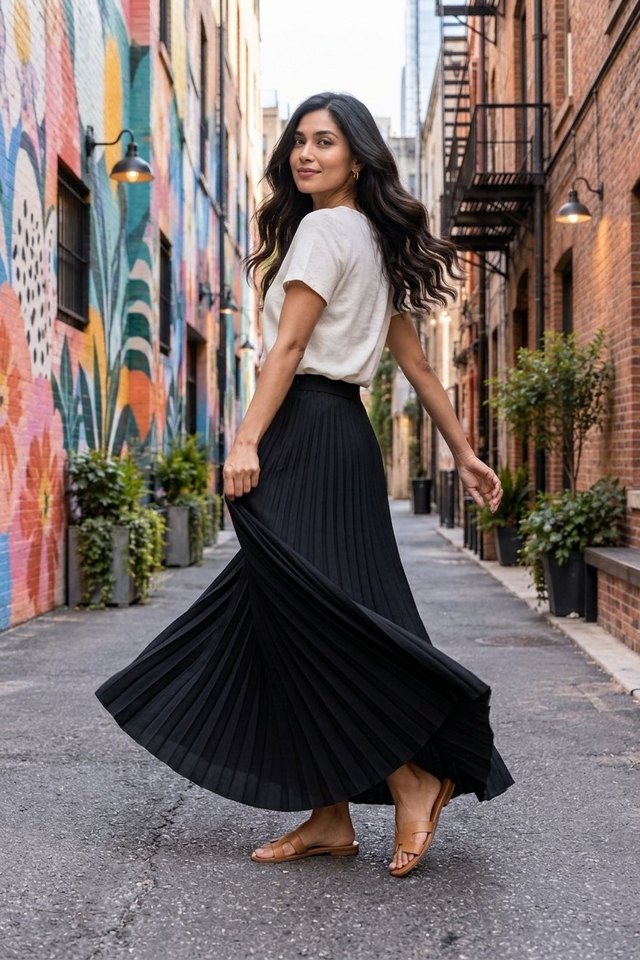
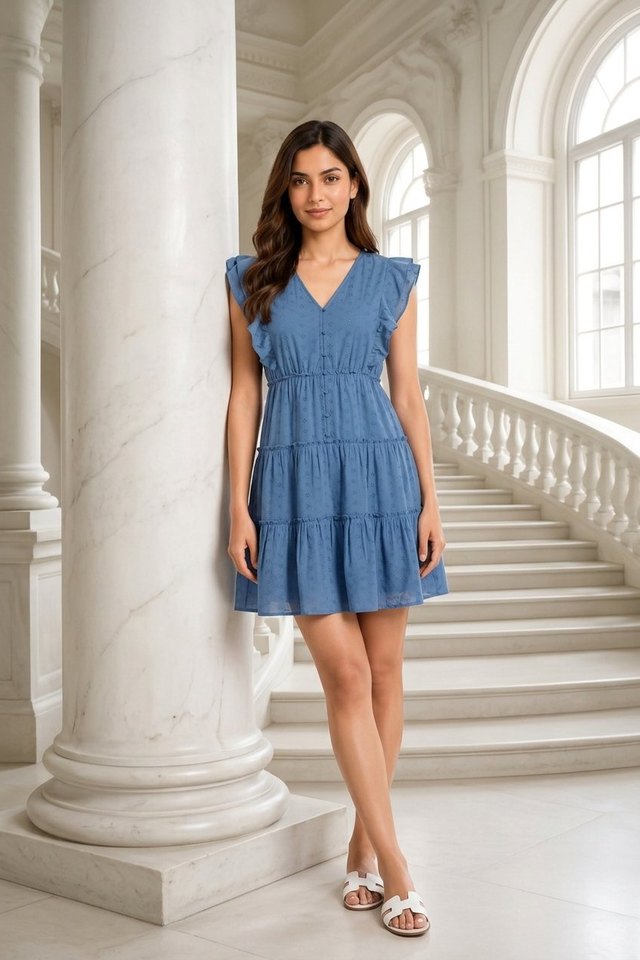
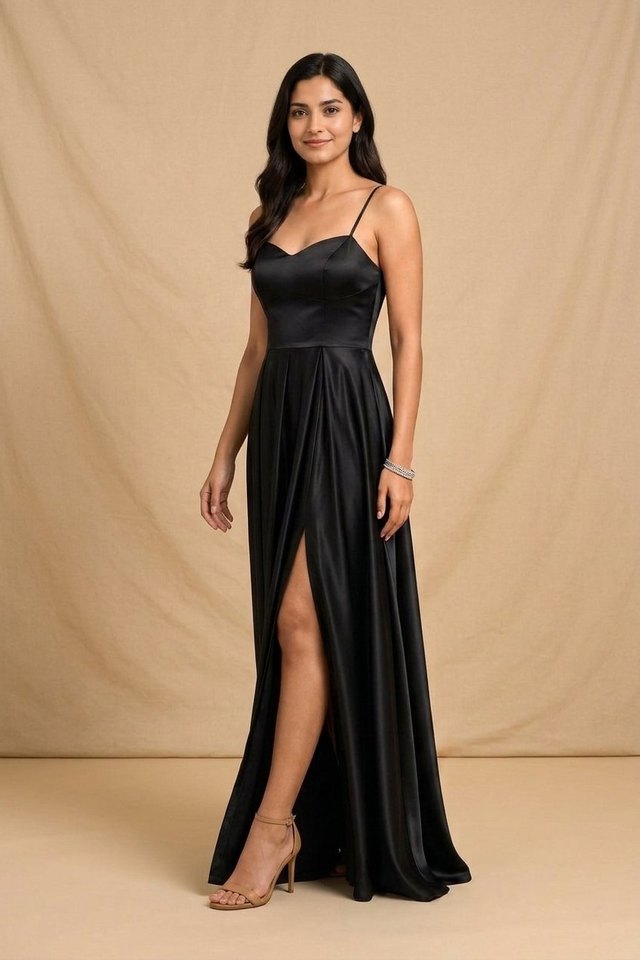
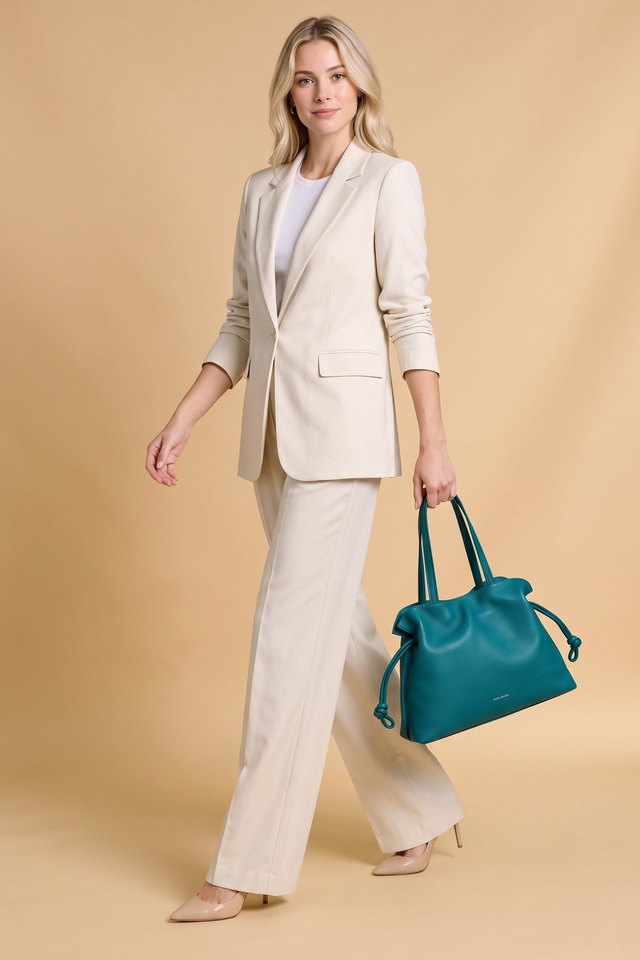
A 40-piece catalog shoot costs ₹40,000–₹1,20,000 and takes three weeks. CatalogX turns your flat garment photos — sarees, kurtas, co-ords, western wear — into photorealistic on-model images in 30 seconds each, with your prints, colours and fall preserved exactly. Built for labels, exporters and boutiques shipping new drops every month.
One flat garment photo — the kind you already have. Pick a feature and watch what CatalogX returns. No studio, no re-shoot, no model booked.
Also in the studio: listing packs, clean cut-outs and share-ready leaflets.
Different catalogs, different problems. Here is where CatalogX fits each one.
Turn around several client catalogs in a month without booking a studio for any of them. Projects keep every client's shots in their own bucket, so nothing gets delivered to the wrong brand.
A full linesheet where one custom model carries the entire range, so buyers compare the garments instead of the faces. An extra colourway costs a credit, not another shoot day.
New arrivals photographed the day they land. No photographer on retainer and no minimum order to justify a session — upload a flat-lay in the evening and list it the same night.
Every drop gets model shots instead of flat-lays, however small the drop. One-click export sizes each image for Amazon, Flipkart and Myntra without a round trip through Photoshop.
Upload your garment, choose a model, pick a pose and background — AI dresses the model in your clothing with studio-quality fit and lighting.
No credit card required — 5 free generations included
Most AI tools make a beautiful photo of a garment. The job is a photo of your garment — the right colour, the right hem, the right drape — because the customer who receives the parcel compares it to the picture.
Generic image models default long — a knee-length kurti comes back as a floor-length one. We measure the hem against the body or the garment's own proportions before a pixel is drawn, and hold it there.
Colourway, embroidery placement and print detail are carried through as constraints rather than left to the model's imagination — the failure that turns a maroon saree into a burgundy one, and a customer into a return.
Each generation is scored for colour match, resolution, framing and exposure. On bulk runs the shots that fall short are flagged for you, so you review the handful that need a look instead of all fifty.
Built against the hardest garments in fashion — sarees, lehengas, dupattas, layered ethnic sets. If the pleats and the pallu survive, a t-shirt is straightforward.
One garment photo in. A whole listing out — stills, angles, scenes and video.
One still becomes a 4–8 second vertical clip for Reels, Shorts and marketplace video slots. From 4 credits.
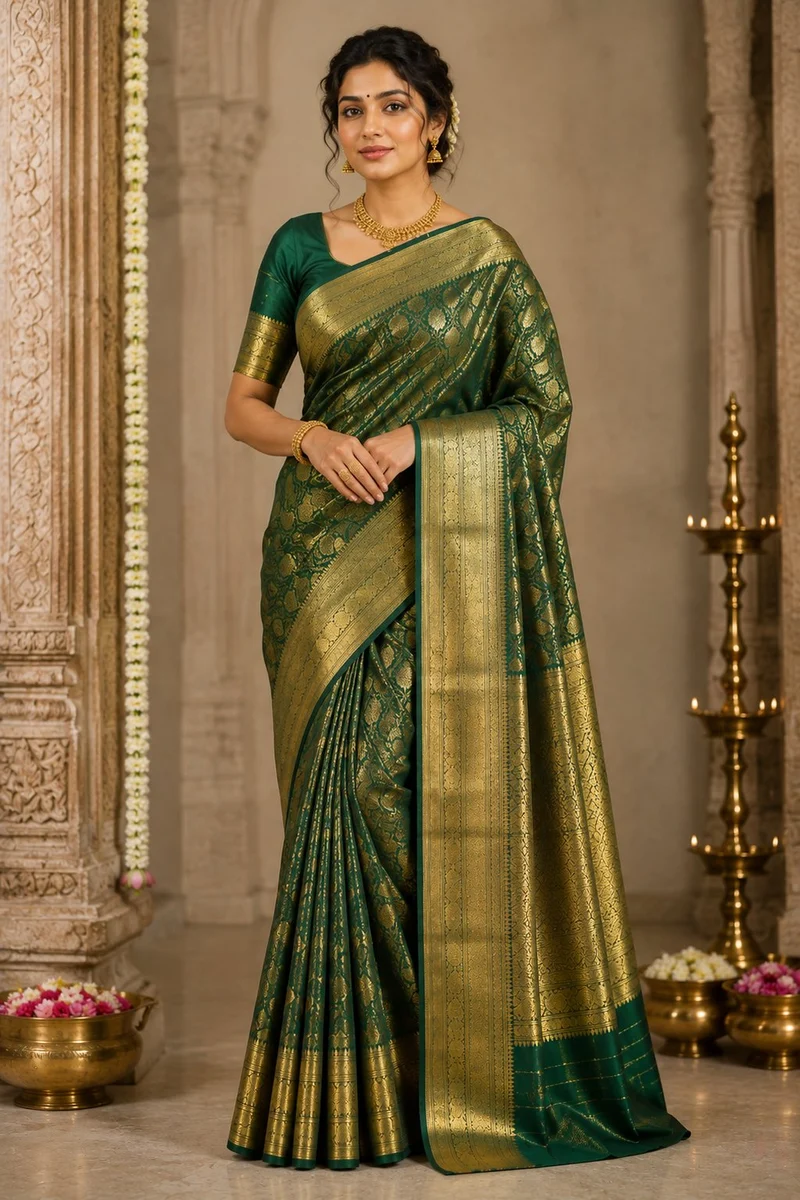
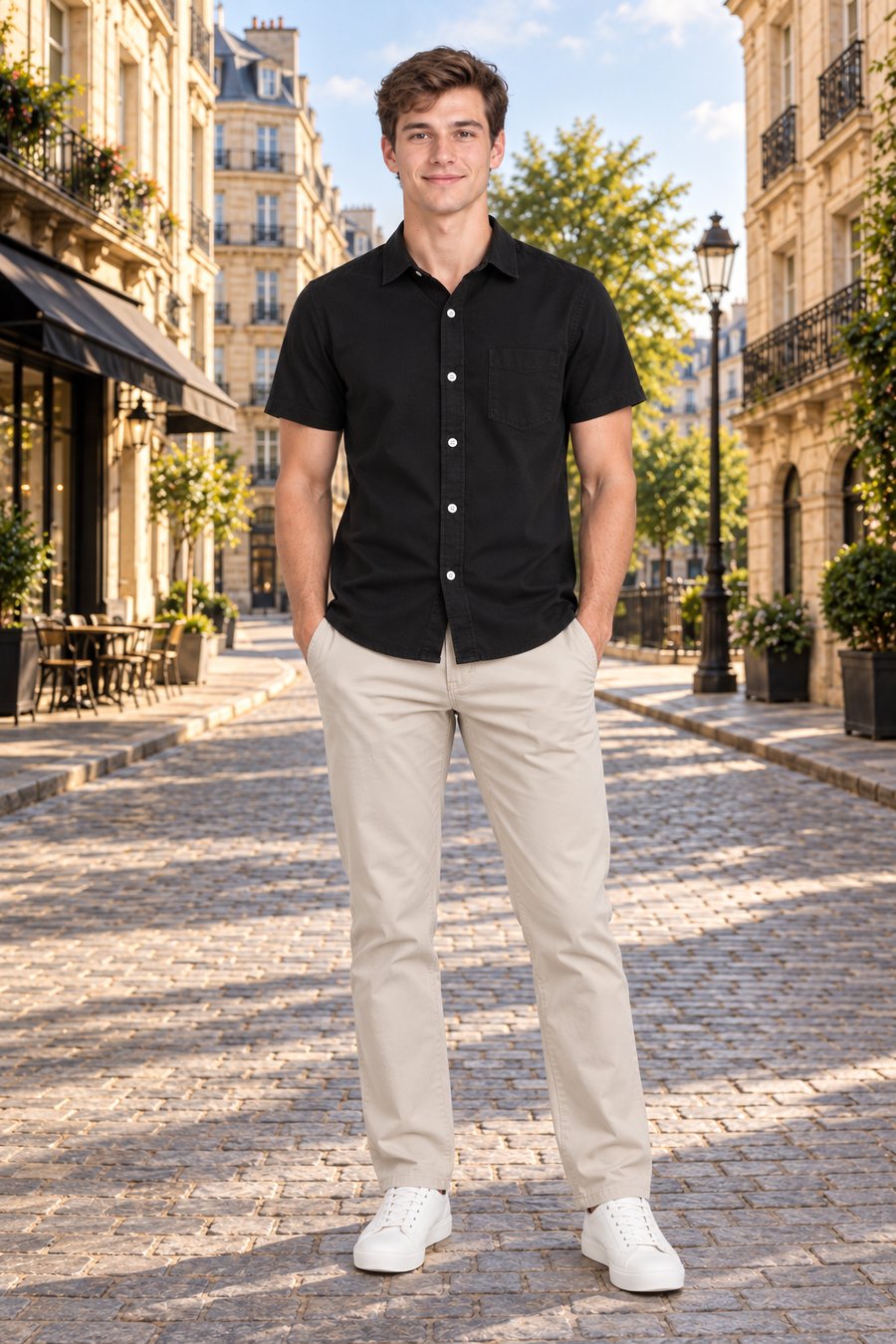
Your flat lay, worn. 30 seconds.
Every age, build and market — or upload your own.
One garment photo returns the full set — front, walking, close-up, side, detail. Same model, same scene, one run.
Keep the photo. Change the person.
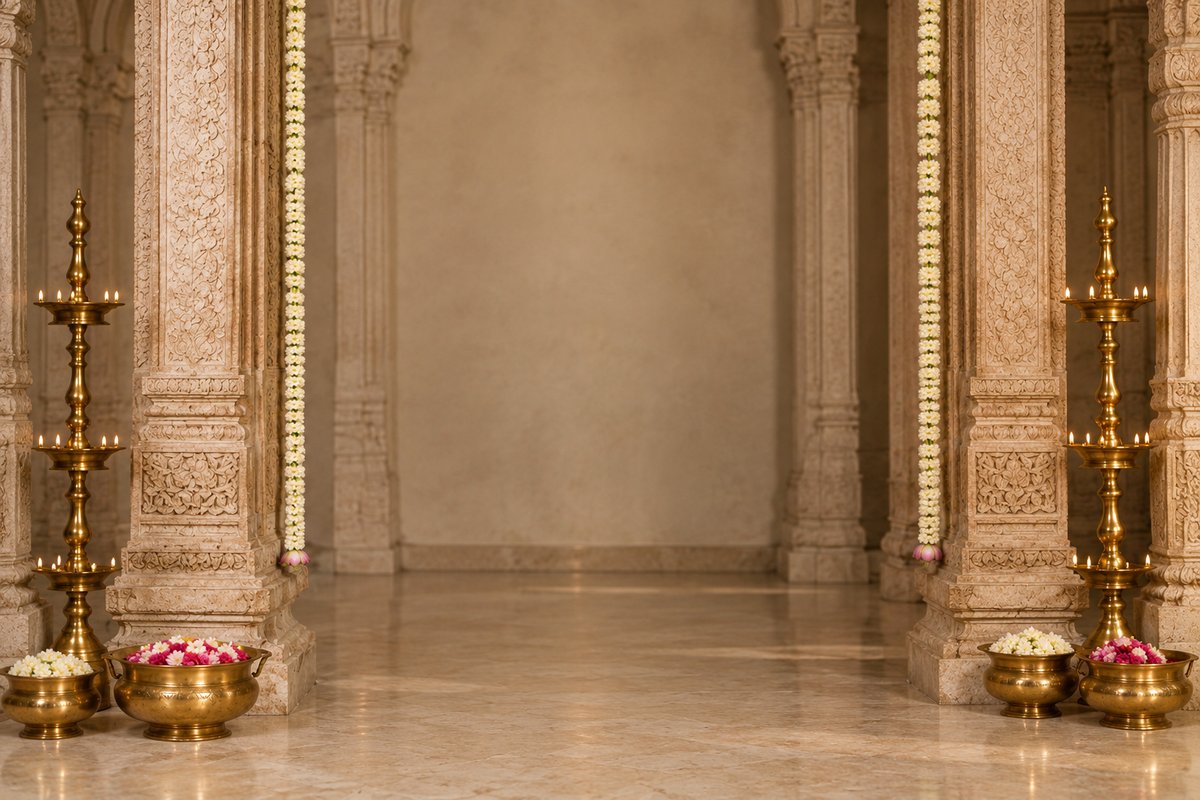
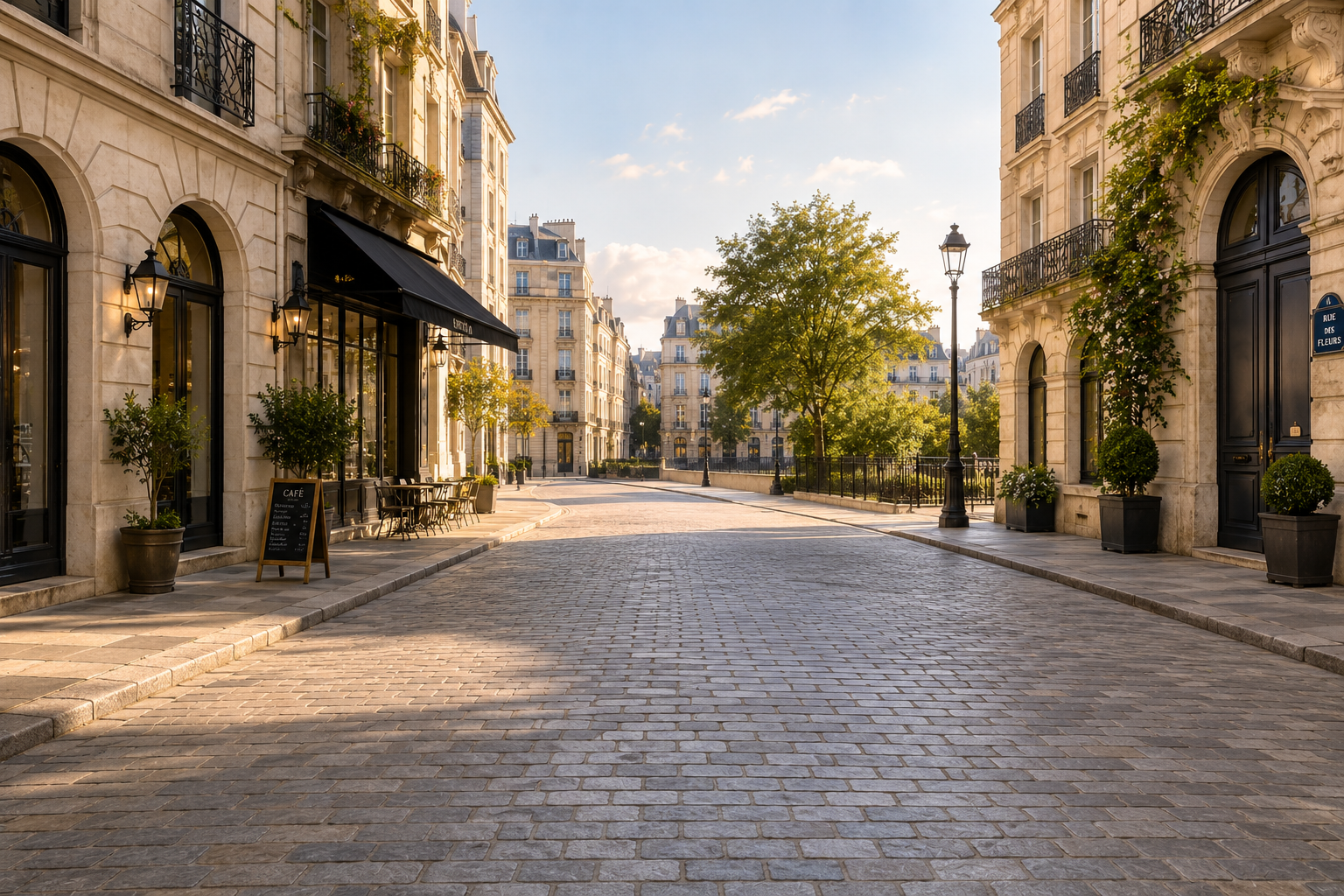
Studio white to golden hour — or your own backdrop.
Marketplace-ready white background in one click — plus shadows, unwrinkle and upscale. No credits.
5 free generations — no credit card
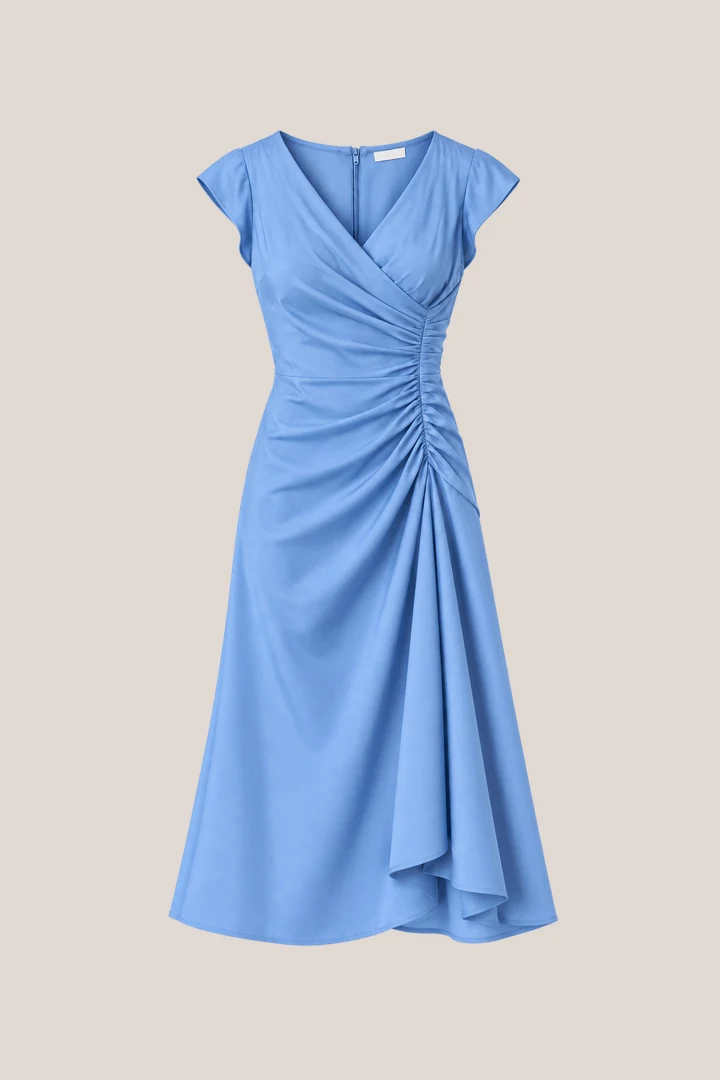
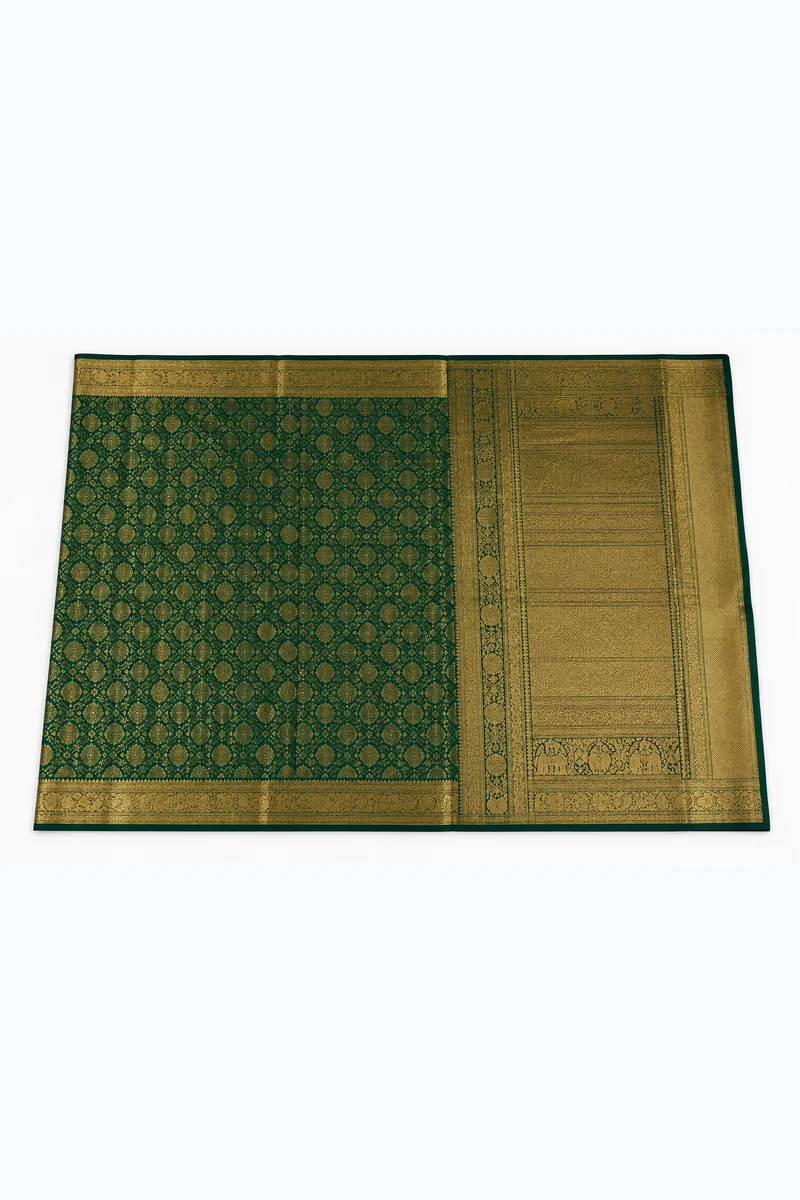
Real catalogue output — every one of these started as a flat garment photo.


How sellers are using CatalogX in place of a studio booking.
A studio catalog used to mean booking a photographer, a model and a location for three days. I uploaded fifty sarees and had the set ready the same afternoon. The drape is what surprised me — the pleats fall where they should.
We listed flat-lays for two years because model shots were out of budget. Moving the same garments onto models changed how the listings read — people can see how a shirt actually sits before they buy.
I drop fifteen to twenty graphic tees a week. Hiring a photographer weekly was never going to happen, so I simply skipped model shots. Now every listing goes up with three angles.
We were paying per-shoot for every seasonal drop and the lead time was worse than the cost — two weeks between samples arriving and the store going live. That gap is gone.
Resale is one-of-one, so a shoot per item is impossible. Being able to put a single garment on a model in a few minutes is the difference between a hanger photo and a listing that looks considered.
Most tools fall apart on anything with real drape — a lehenga or a heavily worked dupatta ends up looking painted on. This was the first one that handled the fabric properly.
Consistency mattered more to us than volume. Saving a model once and reusing it on every product is what makes the collection read as one label instead of a marketplace grid.
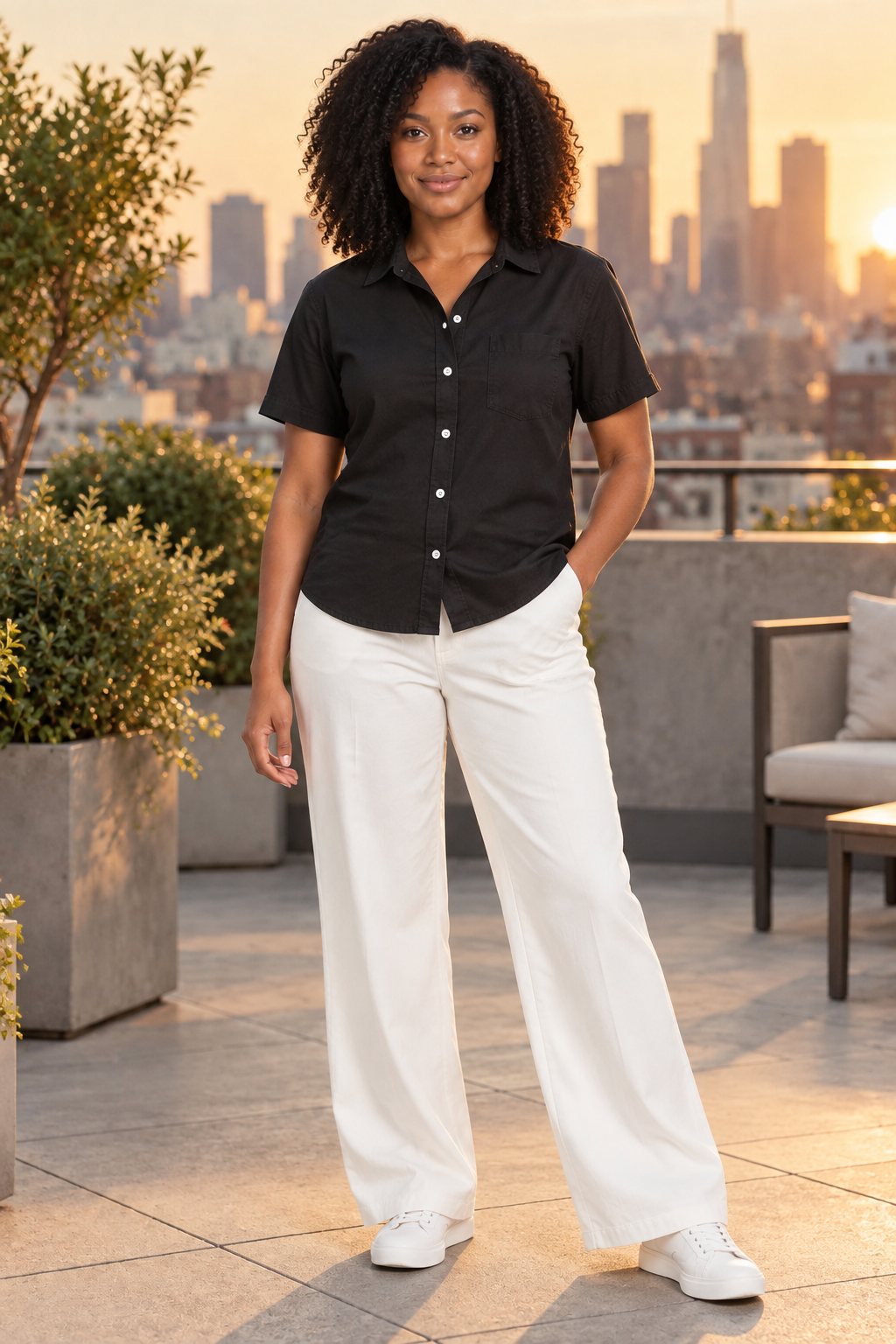
Swim and resort move fast and we are always shooting against a deadline. Generating the on-model set from the flat garment photo means the listing is built before the stock reaches the warehouse.
Buyers ask what the back looks like more than anything else, and a second studio setup for it was never worth it. Getting front, back and detail from one upload closed that off.
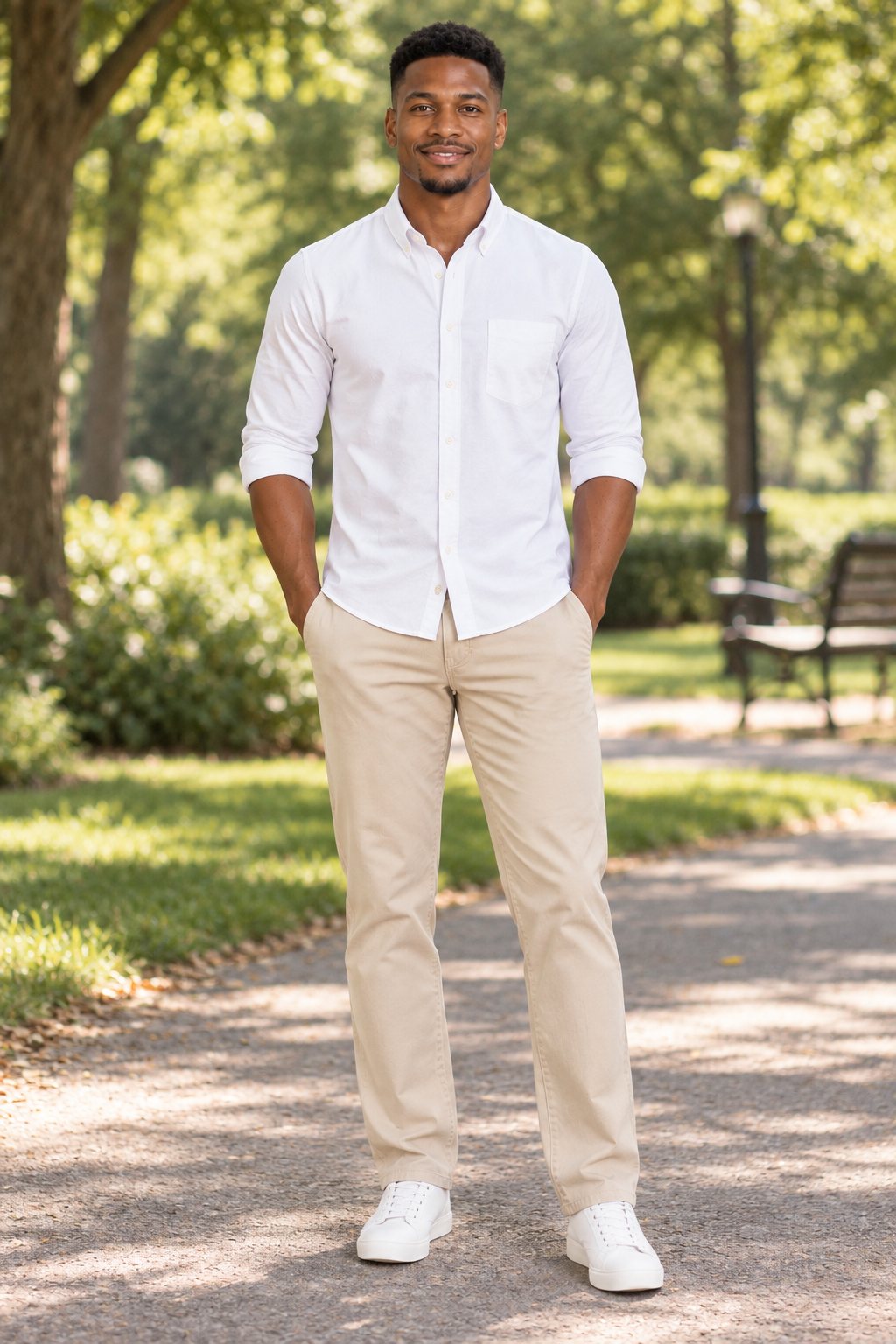
Illustrative examples of how sellers use CatalogX, not verbatim customer quotes.
Start free. Upgrade when you're ready. No hidden fees.
Need more than 850 images a month? Custom volume pricing, full API access for your catalog pipeline and onboarding for your team — built for brands and agencies running large catalogs.
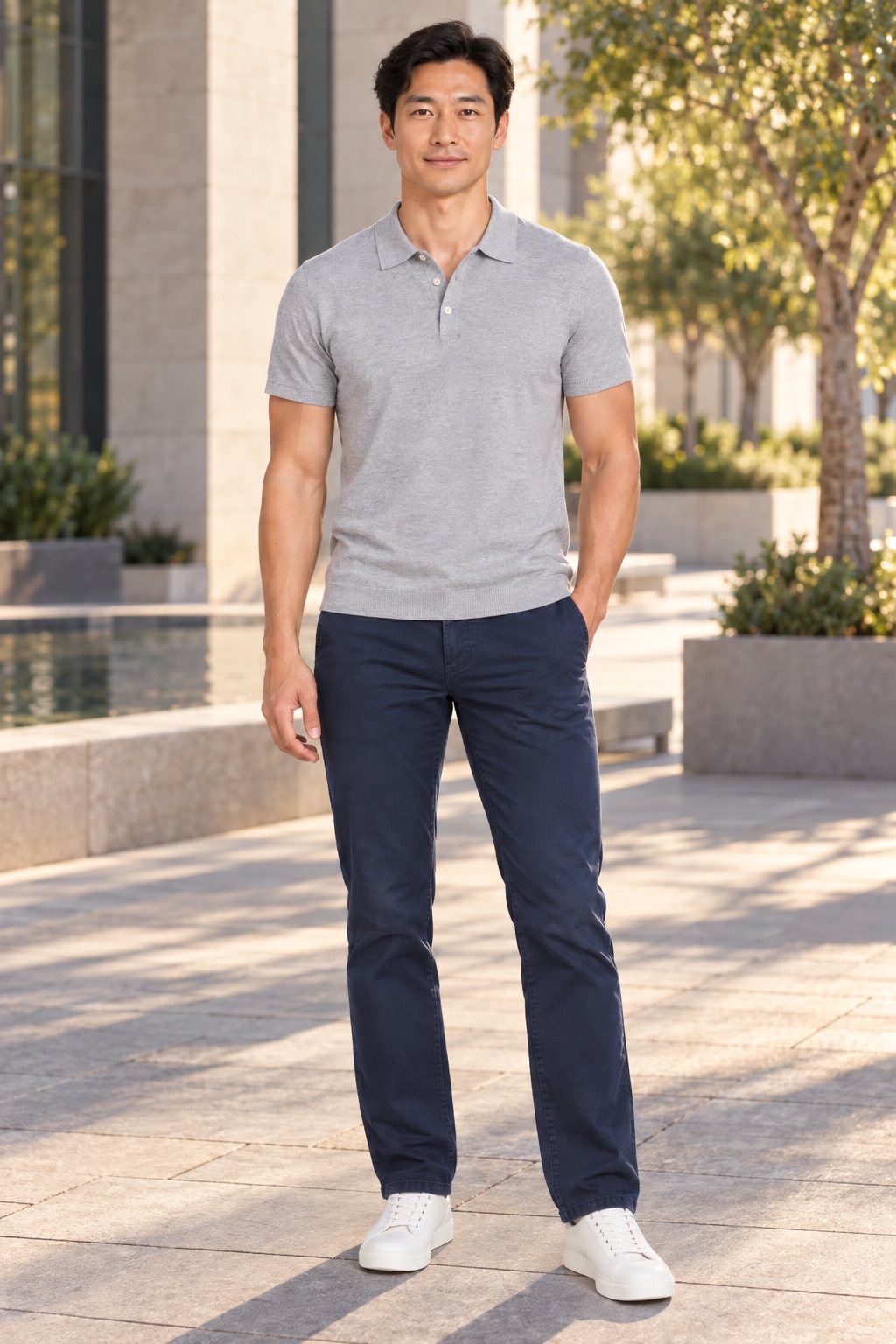
Upload a model photo and a garment image. Our AI generates a photorealistic image of the model wearing that garment in under 30 seconds. Choose from 40+ diverse models, 50+ backgrounds, customize the pose, lighting, and camera angle.
We support 14+ garment types including sarees, kurtas, kurtis, lehengas, t-shirts, shirts, dresses, blazers, jackets, jeans, skirts, hoodies, suits, and kurta-pyjama sets.
Yes. Every new account gets 5 free image generations — no credit card required. Free accounts also get background removal and marketplace export. Need more? The Starter plan gives you 15 HD credits for just ₹299 a month, with credits rolling over. Pro plan starts at ₹849/mo for 55 generations.
CatalogX includes background removal (get transparent PNGs), color variants (generate the same look in different garment colors), HD upscale (up to 4x resolution), and one-click marketplace export (Amazon, Flipkart, Myntra,Etsy, eBay, Instagram, and more). Background removal and marketplace export are free on all plans.
Absolutely. You own the generated images and can use them for product listings, marketing, social media, and catalogs. Images are never watermarked — on any plan, including the free plan — so they are ready for commercial use straight away.
CatalogX preserves the model's face, body shape, and skin tone while accurately rendering the garment's color, texture, fabric, and draping. Results are photorealistic and suitable for product listings.
Yes. Upload one model photo and multiple garment images to generate an entire catalog in one go. Bulk generation is available on all plans, and API access from the Business plan lets your team run catalogs straight from your own PIM or listing tool.
A 40-piece catalog shoot typically runs ₹40,000–₹1,20,000 all-in: ₹8,000–₹25,000 a day for the studio, ₹5,000–₹40,000 for the model, ₹5,000–₹20,000 for a stylist and assistant, plus ₹150–₹400 per image for retouching — and about three weeks between booking and usable files. Business is ₹3,000/month for 250 on-model images, with reshoots and extra colourways costing one credit instead of a new session. See the full breakdown for brands →
Yes. Business covers 250 images a month with API access, custom models and custom backgrounds. Agency is the tier built for shooting on behalf of several clients — 850 images a month, proactive support, priority on feature requests and early access to new tools. Enterprise sits above it for labels running more than 850 images a month, adding custom volume pricing, a named contact who knows your catalog, and team onboarding.
Upload your garments, pick your models, and let AI do the photoshoot. 5 free generations, no credit card, cancel anytime.