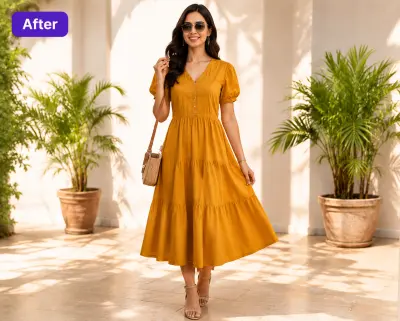
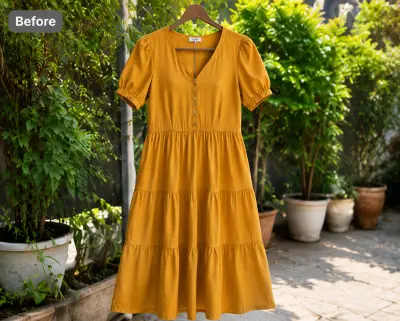
Leggings live or die on how they look on a body. CatalogX turns one flat photo — a flat-lay, a supplier shot, or your print-on-demand mockup — into photorealistic on-model activewear photos in about 30 seconds, with the all-over print, waistband and compression fit reproduced exactly as your photo shows them.
Before — flat photo
After — CatalogXA dress example from our public gallery — the same flat-photo-to-model pipeline handles leggings, yoga pants and sports bras. The honest way to judge it on activewear is with your own product: upload one photo and use a free credit. See how the flat-lay to model conversion works.
No model booking, no studio day, no waiting on retouching. One photo of the actual product is all you need.
A flat-lay on a table, a mannequin shot, a supplier catalog image, or the flat mockup file straight from your print-on-demand provider. Tags, clips and packaging are removed automatically.
40+ models across skin tones and body types — including athletic and plus-size — and 50+ backgrounds, from pure studio white for Amazon and TikTok Shop to gym and outdoor lifestyle scenes.
In about 30 seconds you get a photorealistic on-model shot with print, waistband and seams preserved. You own every output — no watermarks, commercial use on every plan.
For print-on-demand leggings, the print is the entire product. An AI tool that redraws it isn't generating a product photo — it's generating a photo of a different product.
Activewear is unforgiving territory for generative AI. A dress can hide a small redraw in its drape; leggings can't hide anything. The fabric sits against the body, the print wraps every curve, and buyers zoom in on exactly the areas where generic try-on tools fail. These are the failure modes we see most often:
All-over prints are the signature of POD leggings — and the first casualty of generic AI. The tool re-synthesizes the pattern instead of mapping it, so the repeat changes scale mid-thigh, mirrors at the outseam, or dissolves into a vaguely similar texture. Your buyer ordered the galaxy print they saw; they need to receive exactly that galaxy. CatalogX reproduces the print as photographed — scale, repeat and colors stay put.
High-waisted is a product spec, not a styling choice. Generic tools routinely render a high-rise waistband as mid-rise, or invent a fold-over that isn't there — which means returns and "not as described" complaints. CatalogX keeps the rise where your photo shows it.
Compression leggings should read as sculpted and second-skin. Generic AI, trained mostly on woven fabrics, drapes them like joggers — adding wrinkles at the knee and slack at the calf that scream "cheap fabric" to an activewear buyer. Fit is the product claim; the photo has to make it.
Mesh insets and contrast panels are the detail that justifies a premium price — and generic tools frequently smooth them into the base fabric or shift their position on the leg. If the panel is at the side knee in your photo, it stays at the side knee in the output.
A waistband logo that migrates to the hip, or a calf logo that ends up mid-thigh, is instantly recognizable as fake — to buyers and to marketplace reviewers. Placement fidelity is the difference between a product photo and an obvious composite.
This fidelity-first approach isn't an accident. CatalogX was built for garments where getting the construction wrong destroys the sale — saree pleats, border continuity, hem lengths — and that same discipline is what activewear needs: preserve the product pixels, invent only the person and the scene. A plain black legging stays plain. A maximalist print stays maximalist, seam to seam.
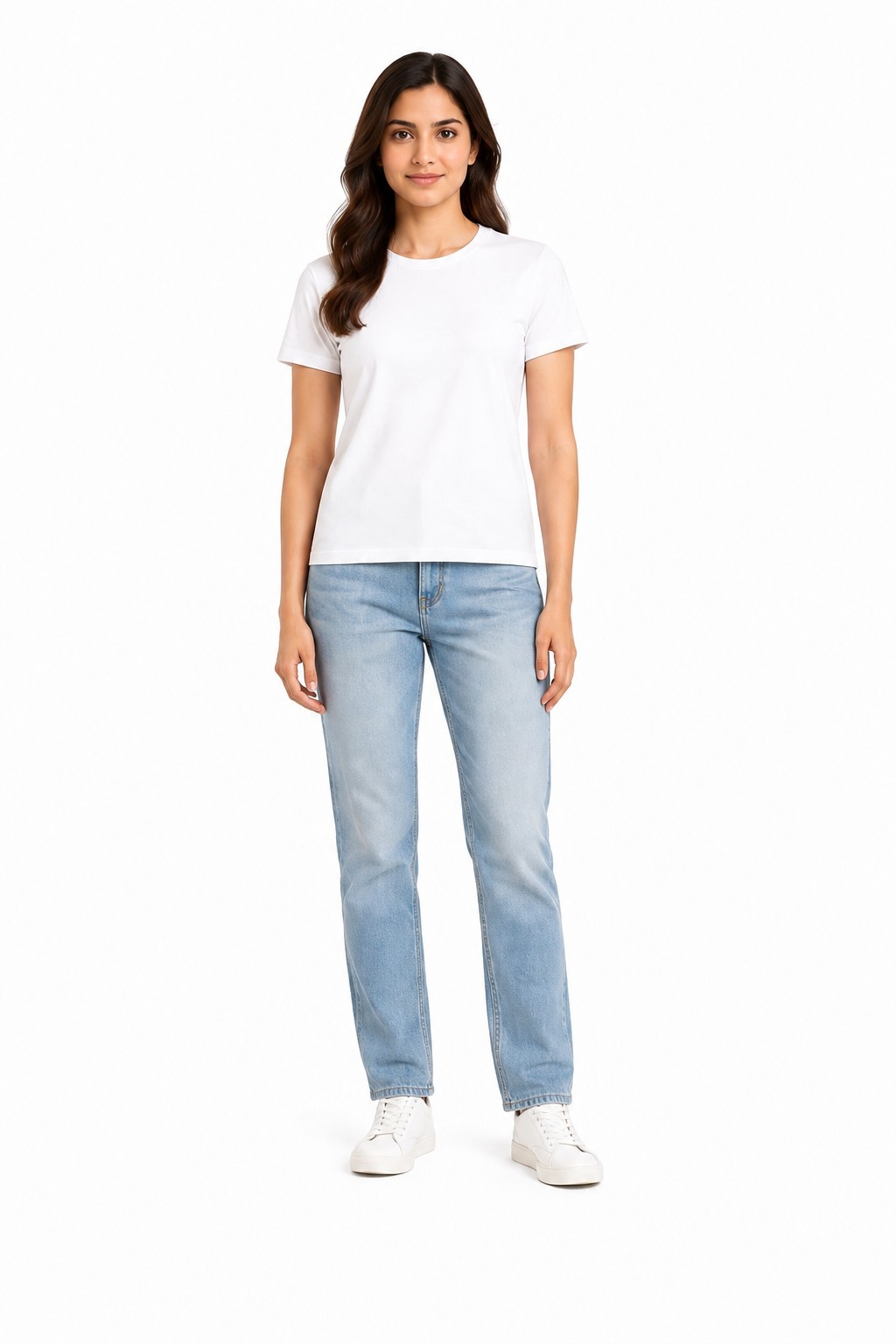
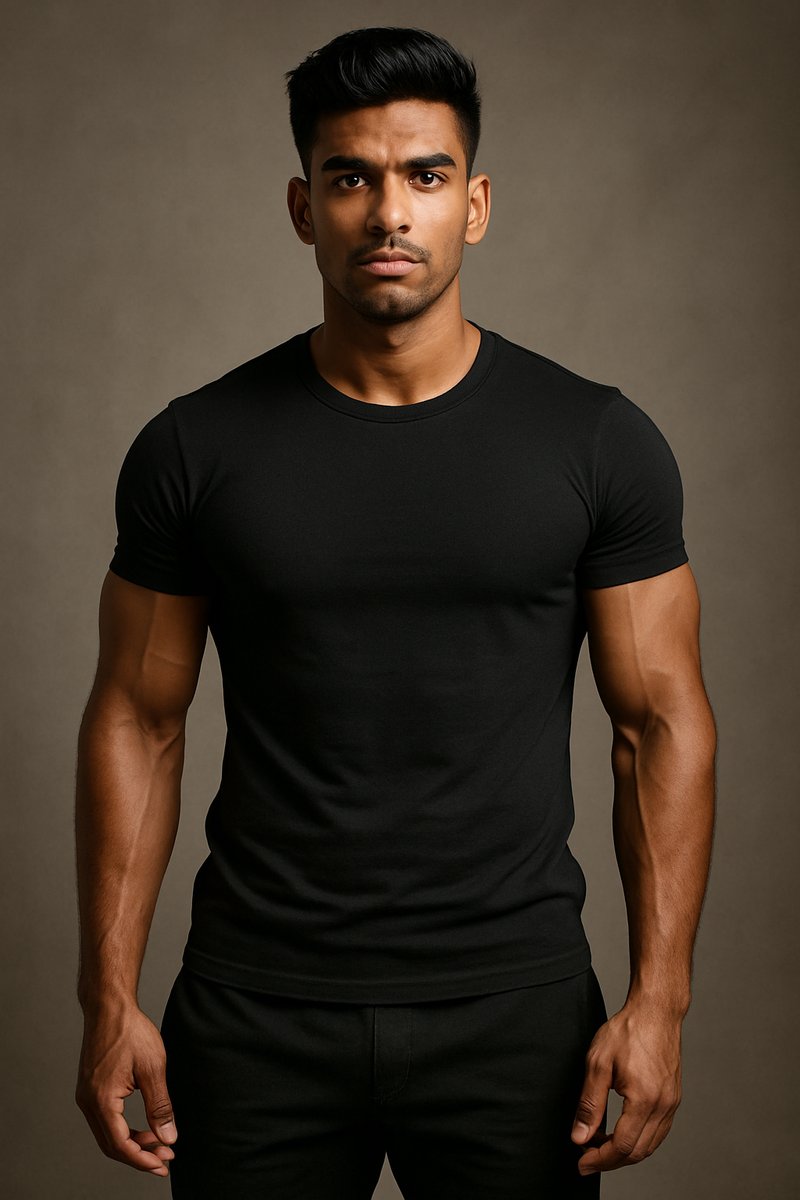
Activewear buyers don't ask "is this nice?" — they ask "how will this look on me?" One sample-size photo can't answer that. A model library can.
Model library — casual
Model library — athleticTwo of the 40+ models in the CatalogX library, shown here as library examples. The range spans skin tones and body types — including athletic and plus-size models, male and female — so the same pair of leggings can appear on several different bodies from one upload, one credit per image.
This matters commercially, not just cosmetically. Sizing anxiety is the biggest brake on online activewear purchases, and the cheapest fix is showing the product on more than one body. With a traditional shoot, every additional model is another day rate; here it's another 30-second generation. Brands selling on Etsy can fill all 20 photo slots with a genuinely useful gallery — the same leggings on an athletic frame and a plus-size frame, in studio white and in a lifestyle scene — instead of ten crops of one photo.
Your POD provider hands you a flat mockup — technically accurate, commercially dead. Buyers scrolling Etsy or TikTok can't picture a flat template on a body. Upload that same mockup file to CatalogX and get an on-model shot where your all-over print survives intact, for every one of the forty designs in your store. New design published in the morning, on-model listing photo by lunch.
You've invested in fabric, fit and finish — but a full studio shoot for every drop, in every colorway, on multiple models, is a five-figure line item. Use CatalogX for the catalog layer: consistent models and scenes across every SKU, same-day photos for restocks and new colorways, and save the studio budget for hero campaign imagery where it earns its keep.
Amazon requires a standing-model MAIN image for adult apparel; Etsy rewards listings that fill their 20 photo slots with genuinely different shots. Both are photo-supply problems, not marketing problems. One upload gives you the compliant white-background MAIN, the lifestyle alternates and the body-diversity gallery — priced per image, not per shoot.
Three ways to get leggings onto a model, compared on what actually matters to a seller.
| Studio photoshoot | Generic AI try-on | CatalogX | |
|---|---|---|---|
| Cost | $300+ per session, or $50–150 per finished image | Often cheap or free to start | Free 5 credits, no card; plans from $9.99/mo |
| Turnaround | Days to weeks: booking, shooting, retouching | Minutes | ~30 seconds per image |
| Print & logo fidelity | Perfect — it's a camera | Weakest point: prints re-synthesized, logos drift | Product pixels preserved — print scale, repeat and logo placement stay put |
| Fit accuracy (compression, rise) | Perfect, on the models you hired | Compression often rendered loose; waistband height changes | Waistband height and compression fit follow your photo |
| Body diversity | One day rate per additional model | Varies; often limited control | 40+ models incl. athletic and plus-size, one credit each |
| New design added to catalog | Wait for the next shoot | Same day | Same day, matching your existing models and scenes |
A studio shoot is still the right call for hero campaign imagery. For keeping a 50-SKU activewear catalog listed with on-model photos, the math doesn't close — see the full AI vs studio cost breakdown.
This catches a lot of activewear sellers: Amazon's MAIN-image rules for adult clothing require the product shown on a standing human model — no flat-lay, no mannequin, no folded product shot. The image should fill roughly 85% of the frame, measure at least 1600px (2000px recommended), and sit on a pure white background. A beautiful flat-lay that works on Etsy is a suppressed listing on Amazon.
CatalogX output is built to this spec by default: a standing model, white studio background, high-resolution export that clears the zoom threshold. Generate the compliant MAIN image first, then spend the rest of your gallery slots on lifestyle scenes and detail shots. The full requirements, rule by rule, are on our Amazon leggings photo guide — and the general Amazon marketplace page covers apparel categories beyond activewear.
Selling on TikTok Shop too? Its catalog spec also wants a pure white background at 1080×1080 or larger — the same white-background generation covers both. Details on the TikTok Shop page. And if you cross-list on Poshmark, note covershots have been 3:4 portrait since March 2026 — full-body model shots crop to that frame cleanly, where tight flat-lay crops don't. See the Poshmark guide.
Yes. Upload a flat photo or print-on-demand mockup of your leggings, pick a model and background, and CatalogX generates a photorealistic on-model photo in about 30 seconds. It works for leggings, yoga pants, bike shorts, sports bras and other activewear, and you own every output with commercial rights on all plans.
CatalogX is built to reproduce the garment exactly as photographed — the print scale, repeat and colors stay as they are in your upload, and logos stay where you placed them. Nothing is invented that your photo doesn't show. For print-on-demand leggings, where the print is the entire product, that fidelity is the whole point.
Amazon's MAIN-image rule for adult apparel is about what the image shows, not how it was made: the product must appear on a standing human model, fill about 85% of the frame, be at least 1600px (2000px recommended) and sit on a pure white background. Leggings are adult apparel, so a flat-lay or mannequin MAIN is non-compliant. CatalogX generates standing-model, white-background images that fit this spec — accuracy to the real product remains your responsibility as the seller.
Any clear photo of the actual product: a flat-lay on a table, a hanger or mannequin shot, a supplier catalog image, or the flat mockup file from your print-on-demand provider. One photo is enough for a full set of on-model shots.
A US studio photoshoot runs $300+ per session, or roughly $50–150 per finished image once you account for the model, studio and retouching. CatalogX starts free with 5 credits and no card required; paid plans run $9.99–$49.99 per month, and each generation takes about 30 seconds.
Yes — the model library covers 40+ models across skin tones and body types, including athletic and plus-size models, male and female. You can generate the same product on several models from one upload, one credit per image, so buyers see the fit on a body like theirs.
Yes. Outputs are high resolution on every plan (4K on Pro and above), which clears Amazon's 1600px minimum, Etsy's 2000px shortest-side recommendation and TikTok Shop's white-background spec. For Poshmark, covershots have been 3:4 portrait since March 2026 — CatalogX's full-body model shots crop cleanly to that frame.
The before/after pair on this page is a dress example from our public gallery — we show real, unretouched outputs rather than staged category images. The same garment-fidelity engine handles leggings and activewear: the fastest way to see it on your product is to upload one photo and use a free credit, no card required.
Upload one flat photo. Get on-model shots with the print, waistband and fit exactly as you designed them — ready for Amazon, Etsy, TikTok Shop and Shopify.