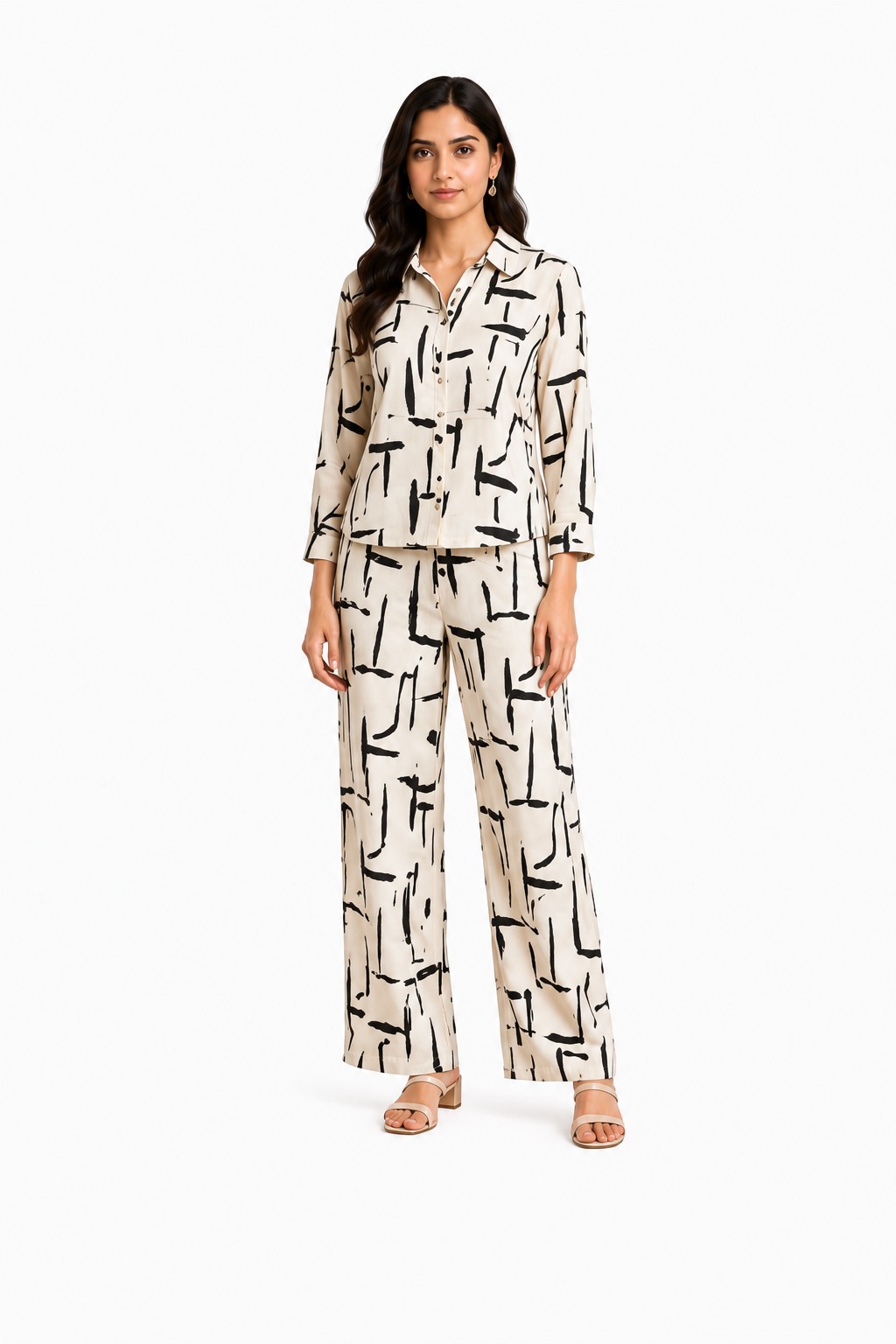
Skirt photos on a model — length, flare and waistline exactly right
Skirt virtual try-on that treats the hem like a measurement, not a suggestion. Upload one flat photo and get a photorealistic on-model shot where a midi stays a midi, the pleats stay countable, the A-line keeps its flare and the waistband stays the waistband you're selling. About 30 seconds per image — no photoshoot, no model booking, no borrowing the brand's photos.
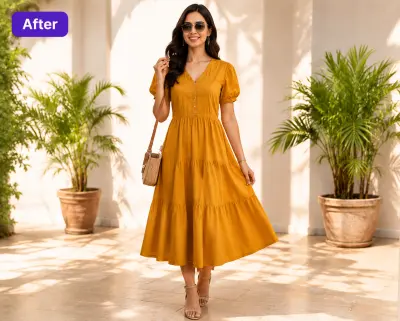
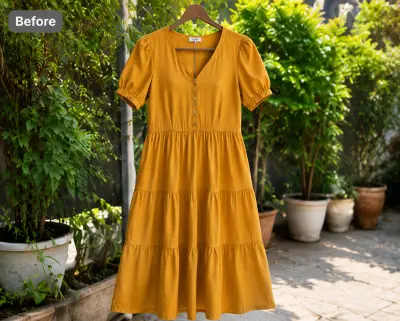
A dress example from the same engine: flat photo in, on-model shot out, hem at its true length. The identical length-anchoring pipeline runs on every skirt upload.
Sellers use CatalogX images onEtsyPoshmarkDepopAmazon
Built For Skirt Sellers
Skirts are the listing photo buyers second-guess most
A skirt folded on a table answers almost none of the questions a buyer is actually asking. Where does the hem land — above the knee, at the calf, at the ankle? How much does it flare when it hangs from a waist instead of lying flat? Does the waistband sit high or at the hip? If you run a boutique restocking from wholesale suppliers, sew skirts for your Etsy shop, or flip thrifted finds on Depop and Poshmark, you've hit the same wall: the only photos you have are flat-lays or the brand's stock images, and neither shows your skirt on a body.
Booking a photoshoot for a $38 skirt makes no sense — a US studio session runs $300+ before retouching, roughly $50–150 per finished image. So most listings go up flat, and buyers either scroll past or, worse, buy on a guess about the length and return it when they guessed wrong. CatalogX turns the flat photo you already have into an on-model listing shot in about 30 seconds — sized for Etsy, Amazon and Poshmark, with full commercial rights and no watermark on every plan.
How It Works
Skirt flat-lay to model shot, in three steps
From the photo on your phone to a listing-ready model photo in about 30 seconds.
Upload the skirt photo
A flat-lay, hanger shot, mannequin shot or your supplier's catalog image — anything showing the full length from waistband to hem. Pins, tags and packaging are removed automatically.
Pick a model & scene
40+ models across skin tones and body types, 50+ backgrounds — pure studio white for Amazon MAIN images, lifestyle scenes for Etsy, Poshmark and Depop. Reuse the same model for every listing.
Download & list
Photorealistic on-model photos with the hem, pleats, flare and waistband rendered correctly. No watermarks, full commercial rights on every plan, 4K output on Business and above.
A skirt is defined by exactly the attributes diffusion models are loosest about: length, volume and construction detail. These are the five failure modes sellers hit with generic try-on tools — and how CatalogX handles each.
Failure 1: Hem length drifts between mini, midi and maxi
This is the highest-stakes attribute in a skirt listing. Generic AI treats length as a style choice, so your 24-inch midi comes out grazing the ankle in one generation and mid-thigh in the next — and a buyer who ordered knee-length and received the photo's promise of neither is a guaranteed return. CatalogX measures the garment's length from your photo and anchors the hem in inches on the model: the skirt ends where the tape measure says it ends, and a hem-length check runs on every generation before you see it.
Failure 2: Pleats merged into a smooth panel
Knife pleats, box pleats and accordion pleats are what your buyer is paying for — and generic AI averages them into one smooth surface, or renders a random number of soft creases that changes between generations. CatalogX keeps pleats countable, with the fabric's print or stripe continuing across each fold instead of smearing, so a 16-pleat tennis skirt still has its pleats in the listing photo.
Failure 3: A-line flare flattened into a pencil silhouette
The silhouette is the sale: an A-line skims out from the waist, a circle skirt swings, a pencil skirt doesn't. Generic tools default to whatever silhouette dominated their training data, flattening a full A-line into a straight column — misrepresenting both the cut and the fit. CatalogX reads the flare from your flat photo's proportions and renders the volume the pattern actually has.
Failure 4: Waistband style silently changed
A paper-bag waist becomes a plain band. A shirred elastic waist becomes a fitted yoke. Exposed buttons vanish; a zip appears where there wasn't one. Buyers filter and search by these details, so a changed waistband isn't a cosmetic error — it's a misdescribed item. CatalogX reproduces the waistband as photographed and invents nothing your photo doesn't show.
Failure 5: Wrap details lost
A wrap skirt's diagonal front edge, tie closure and overlap are its entire identity, and generic AI routinely welds the wrap shut into a plain seamed skirt — or drops the tie altogether. CatalogX keeps the wrap reading as a wrap: visible overlap, the tie where your photo puts it, the asymmetric hemline intact.
Every Cut, Rendered As Cut
Mini to maxi, pleated to wrap: style-aware rendering
The same fidelity rules produce different silhouettes for different patterns — because a tiered maxi and a pencil skirt shouldn't drape the same way.
Mini, midi & maxi
Length is anchored in inches from your photo, so the category your buyer filtered for is the category on the model — a mini reads above the knee, a midi at the calf, a maxi at the ankle.
Pleated
Knife, box or accordion — pleats stay crisp and countable, with prints and stripes continuing across every fold instead of dissolving into texture.
A-line
The flare survives. The skirt skims out from the waist at the angle your pattern cuts, rather than collapsing into a straight column.
Pencil
The opposite discipline: a slim, structured line through the hip with no invented volume, ending exactly at the photographed length — a fit buyers judge to the inch.
Wrap
The overlap, tie and diagonal front edge stay legible as a functioning wrap, not welded into a seamed tube.
Tiered
Each tier keeps its gather and proportion, so a three-tier prairie skirt shows three distinct tiers — not a vague ruffle gradient.
Fabric matters as much as cut. A pleated satin midi holds sharp fold lines and a liquid sheen; a cotton tiered maxi hangs soft with matte volume; denim holds structure at the hip. CatalogX reads the fabric from your photo and drapes accordingly, instead of applying one generic fall to everything. And because you pick the model, one model can wear your entire skirt rack — so a boutique's shop page reads like one brand, not a patchwork of supplier photos.
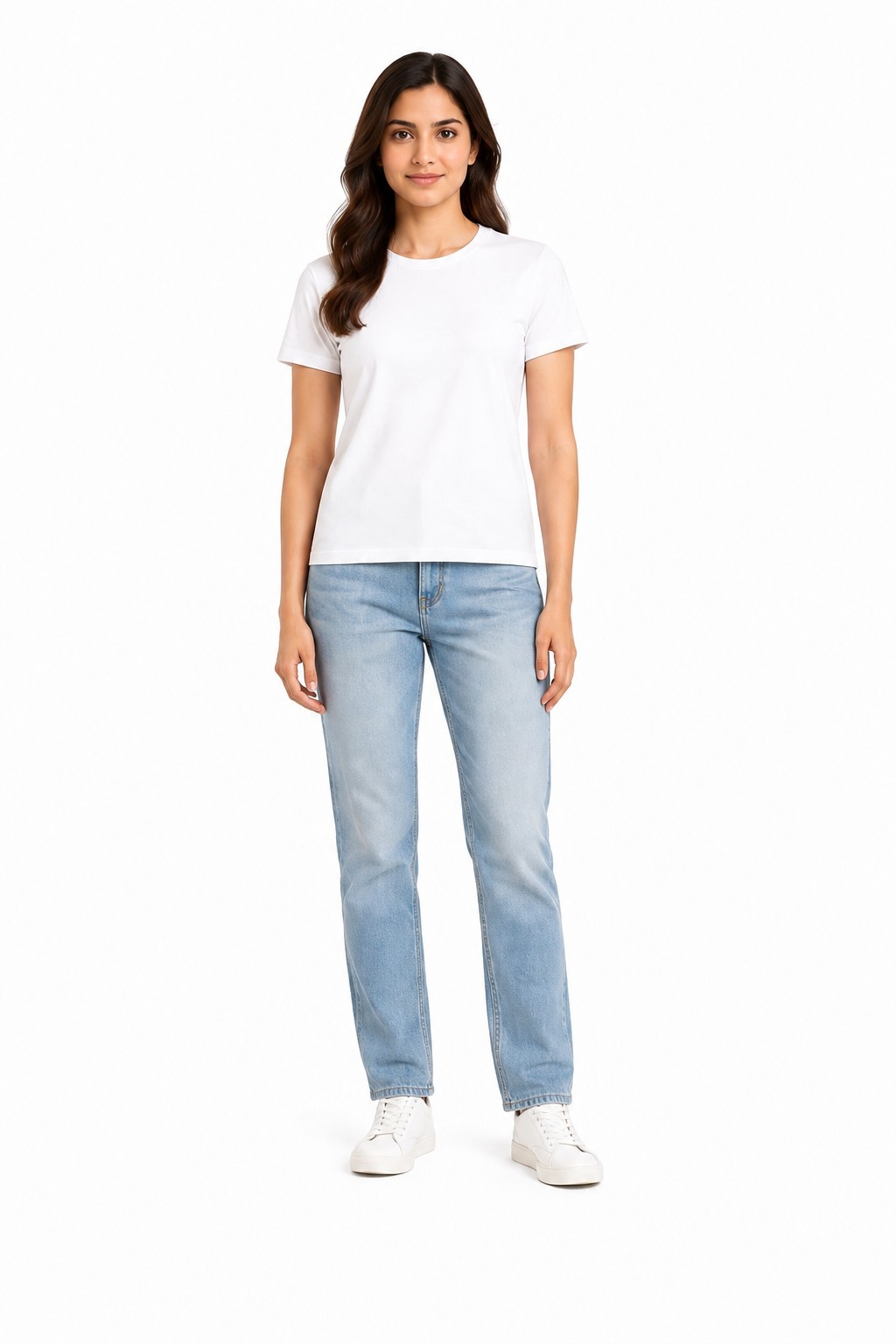
One of 40+ models in the CatalogX library — pick one and she wears every skirt in your shop.Casual model options suit Depop and Poshmark listings; studio looks suit Amazon MAIN images.
The Honest Comparison
Studio photoshoot vs generic AI vs CatalogX
Three ways to get a skirt on a model. Each is right for someone — here's the trade.
US studio photoshoot
Generic AI try-on
CatalogX
Cost
$300+ per session; roughly $50–150 per finished image
Free–$50+/mo
Free 5 credits; plans $9.99–$49.99/mo
Hem-length fidelity
Exact — it's a real garment on a real body
Drifts between mini, midi and maxi across generations
Measured from your photo, anchored in inches, checked every generation
Pleats countable, flare preserved, waistband and wrap as photographed
Turnaround
Days to weeks: booking, shoot day, retouching
Minutes
~30 seconds per image
Consistency across catalog
Only within one shoot; the next session means a new model and new light
Model and lighting drift between generations
Same model, same scene, every listing
Best for
Brand campaigns and lookbooks where you art-direct every frame
Quick drafts where exact length and detail don't matter
Listing photos where the length and details are the product
To be fair to the alternatives: a great studio shoot is still the ceiling for a hero campaign image, and generic AI tools are fast and cheap when precision doesn't matter. The gap is the length-critical listing photo — where a two-inch hem drift is a return, not a rounding error. Full cost math in our AI vs studio photoshoot cost breakdown.
Yes — this is the check CatalogX is strictest about. It measures the garment's length from your photo and anchors the hem in inches on the model, so a 24-inch midi stays a midi and never drifts to mini or maxi. Hem length is the single most return-prone attribute in skirt listings: a buyer who ordered knee-length and pictures ankle-length sends it back. Every generation runs a hem-length fidelity check before you see it.
Yes. Amazon US requires adult apparel MAIN images to show the product on a standing human model — no mannequin, no flat-lay — on a pure white background, filling about 85% of the frame, at 1600px or larger (2000px recommended). CatalogX generates exactly that from a flat skirt photo: standing model, white studio background, high resolution.
Poshmark covershots have been 3:4 portrait since March 2026 — a vertical on-model shot now fills the tile a square used to crop. Depop remains 1080×1080 square. CatalogX outputs are high resolution and framed on the model, so the same generation crops cleanly to both, plus Etsy's 2000px shortest side and eBay's 1600px longest side.
No. CatalogX reproduces the garment as photographed: a paper-bag waist stays paper-bag, an elastic waist stays elastic, pleats stay countable with the print continuing across each fold, and a wrap tie stays a functional-looking wrap. Nothing is invented that your photo doesn't show — a plain skirt stays plain.
Either works. A flat-lay showing the full length from waistband to hem is ideal, because the length measurement is taken from your photo. Hanger shots, mannequin shots and supplier catalog photos also work — pins, tags and packaging are removed automatically. If the skirt has a wrap tie or button placket, lay it so that detail is visible.
A US studio photoshoot runs $300+ per session, or roughly $50–150 per finished image once you account for the model, studio and retouching. CatalogX starts free with 5 credits and no card; paid plans run $9.99–$49.99 per month. A single generation takes about 30 seconds.
Etsy's rule is about the item, not the camera: listing photos must accurately represent what you ship. Photorealistic AI images of your real skirt — the approach CatalogX takes — work the same way mockups do for made-to-order pieces. Keep the photo true to the actual item, include your original flat photo in the gallery, and disclose AI use wherever Etsy asks.
Yes. You own all outputs on every plan, including the free tier. There are no watermarks, and commercial use — Etsy listings, Amazon, Poshmark, Depop, your own Shopify store, Instagram ads — is included.
Your next skirt listing, on a model today
Upload the flat photo you already have. In 30 seconds, see the hem, pleats and flare rendered the way your buyer will wear them — at the length you'll actually ship.
 →
→