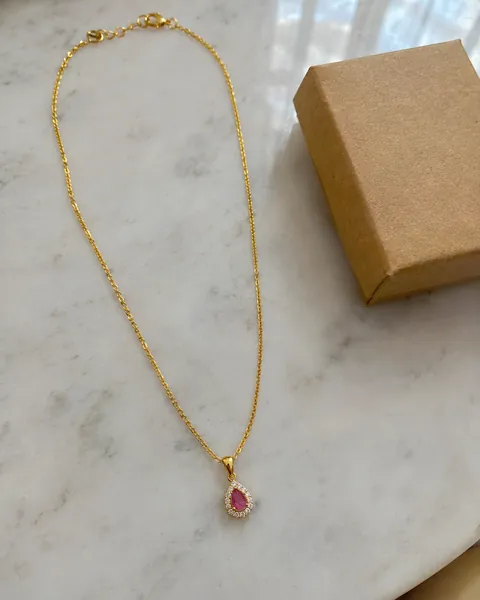
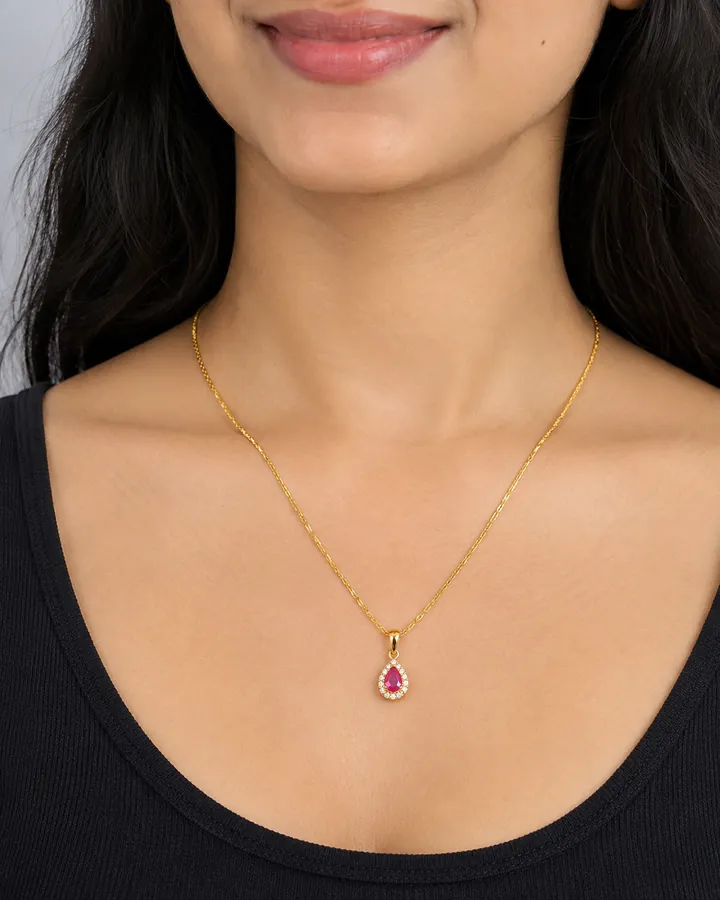
A good necklace model photo shows exactly where the necklace falls: on clear skin at the throat and collarbone, with the neck lengthened, hair off the chain, and the whole run from clasp to pendant visible. Length decides everything else: a 16-inch choker wants an open or off-shoulder neckline, an 18-inch princess chain sits just below the collarbone and suits a scoop or V, and anything 24 inches or longer can fall over a high neckline. With AI, state the chain length. CatalogX turns "45 cm chain" into "sits just below the collarbone", so a delicate chain is not drawn as a statement piece.
Necklace length chart
Lengths are named by where they fall on an average adult, and the names are what buyers search for. These are the bands CatalogX uses to place a stated chain length on the model:
| Name | Chain length | Where it sits |
|---|---|---|
| Collar | up to 38 cm (under 15") | Tight, halfway up the neck |
| Choker | 38–42 cm (about 16") | Base of the neck, above the collarbone |
| Princess | 42–48 cm (about 18") | Just below the collarbone |
| Matinee | 48–61 cm (20–24") | Between the collarbone and the bust |
| Opera | 61–91 cm (24–36") | Mid-chest, at or below the bust |
| Rope | over 91 cm (over 36") | Below the chest |
A pendant adds its own drop below the chain's lowest point, so a 45 cm chain with a 3 cm pendant reads lower than the chain alone. Put both numbers in your listing. On a real model, neck size and build move all of these by a few centimetres; the point of the photo is to show the typical case honestly.
Which neckline for which length
The neckline is the frame around the necklace. Get it wrong and the necklace either sits on fabric, fights a collar, or disappears. A practical pairing:
| Necklace | Neckline that shows it | Avoid |
|---|---|---|
| Collar, choker | Off-shoulder, strapless, boat neck, wide scoop | Crew necks and collars that cover the throat |
| Princess, pendant | Scoop, V-neck, sweetheart | High necks that the pendant sits on top of |
| Matinee | V-neck, open collar shirt, plain crew neck | Busy prints at chest height |
| Opera, rope | Plain high neck or crew neck; it can fall over fabric | Deep V-necks that split the line of the necklace |
| Bridal and heavy sets | Deep or wide neckline, often a saree blouse or lehenga choli | Embroidery at the neckline that competes with the stones |
Whatever the neckline, keep the fabric plain where the necklace sits. A print or embroidery under a pendant makes both unreadable.
Shooting a necklace on a model
- Lengthen the neck. Chin very slightly lifted, shoulders down and back. A dropped chin bunches the skin over a choker and hides a collar necklace entirely.
- Hair off the chain. Behind the shoulders or up. Hair over one side breaks the line, and buyers read a broken line as a shorter chain.
- Centre the pendant and check the clasp has slid round to the back. A clasp at the side looks like a flaw.
- Frame by the necklace. From just above the head to just below the lowest point of the piece. A choker needs only head and upper chest; a long haar needs the torso to mid-chest. Wider than that and a fine chain becomes a thread.
- Soft side light. It models the collarbone, which is the ruler buyers judge length against, and keeps polished metal from blowing out.
- One necklace per photo, unless you sell them layered as one product. Extra pieces invite "is this included?" questions.
Getting the same photo with AI
- Lay the necklace out, uncoiled, on a plain, non-reflective surface: clasp at the top, pendant at the bottom. A coiled chain's length cannot be read, and CatalogX's upload check flags it before you spend a credit.
- Choose Accessories, then Jewellery, then Necklace. The necklace rule keeps the throat and collarbone clear whatever the outfit, so the piece lies on skin, lifts the chin a little and moves the hair off the chain so the full run is visible.
- Type the chain length or tap a preset (Choker 40 cm, Princess 45 cm, Matinee 55 cm, Opera 80 cm). Inches work too. It maps to the bands in the chart above.
- Pick the model, outfit and scene. For a fine gold chain, Plain & Neutral keeps the neckline quiet; for a kundan or temple haar, the Bridal or Festive outfit and a palace or silk-studio background suit the piece.
- Check the result. The frame adapts to the piece: it runs from just above the head to just below the necklace's lowest drop. After every render the gold or silver tone is matched back to your photo; on Pro and above an AI reviewer compares the render with your original.
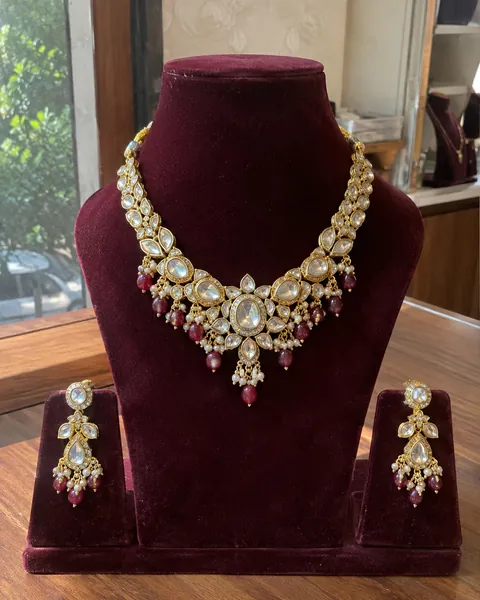
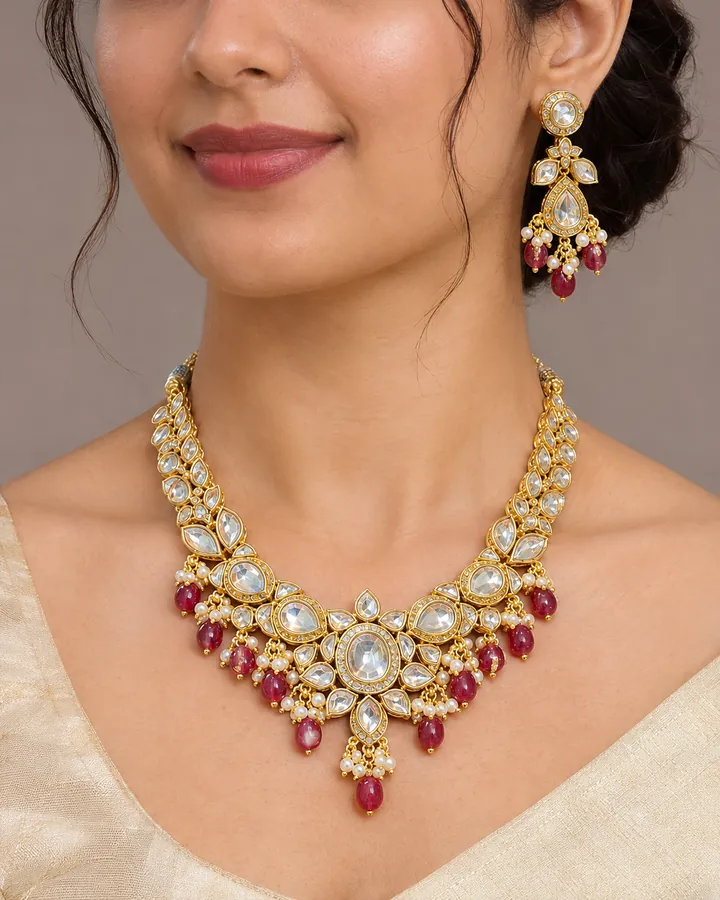
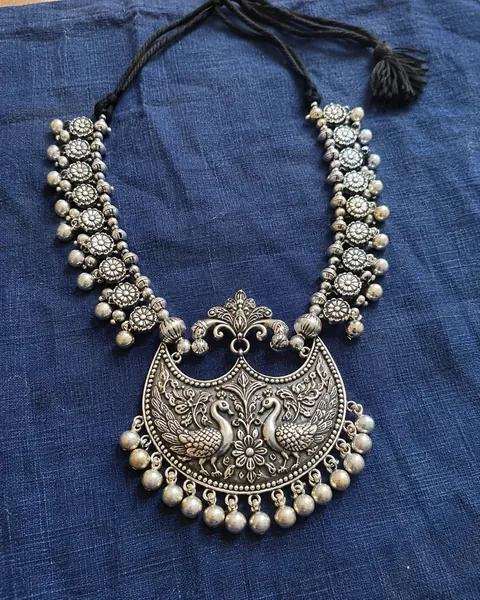
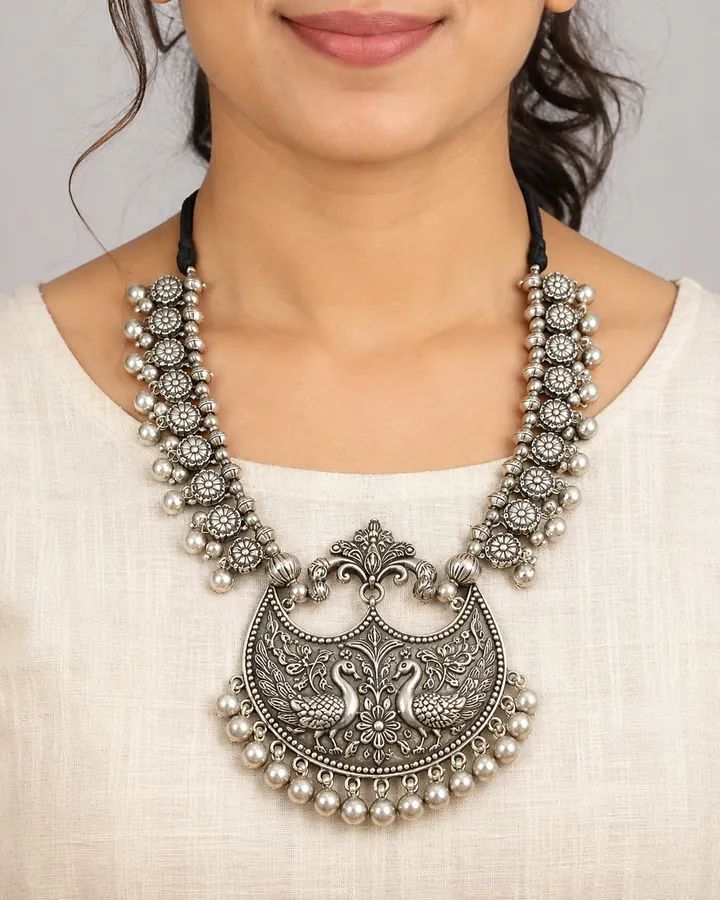
Selling a matching set? Choose Full Set, or add the earrings as the Matching Earrings photo. Every piece is placed at its own spot and the frame widens to hold them all. Earring-specific advice is in how to photograph earrings on a model.
What it costs
One HD photo is 1 credit: $0.17–0.33 on monthly plans (Starter $9.99 for 30, Pro $19.99 for 100, Business $49.99 for 260, Agency $149.99 for 900), from $0.15 on volume plans, and the first 5 are free with no card. Sellers in India pay in rupees, from ₹12 a photo; see the jewellery model photoshoot page for India.
2K uses 2 credits and 4K (Business and above) uses 4. Marketplace export, background removal and a written title, bullets and description through the Listing Pack are free on every plan.
Frequently asked questions
Around 18 inches (about 45 cm), princess length, which sits just below the collarbone on most adults. It works with most necklines and is the default many pendants are sold on.
An open one: off-shoulder, strapless, boat neck or a wide scoop, so the choker sits on skin at the base of the neck. A crew neck or a collar covers it.
Photograph it worn, with the collarbone and chest in frame, and state the chain length and any pendant drop in the listing. With CatalogX, type the length (for example "45 cm chain") and the necklace is placed at that point on the model.
Without a size, any image model tends to enlarge small pieces. CatalogX takes the chain length as an input and turns it into a body landmark, so a fine 16-inch chain sits at the base of the neck rather than mid-chest.
Yes. Choose Full Set, or add the earrings as the Matching Earrings photo. Each piece is placed at its own location and the frame widens to fit them all.