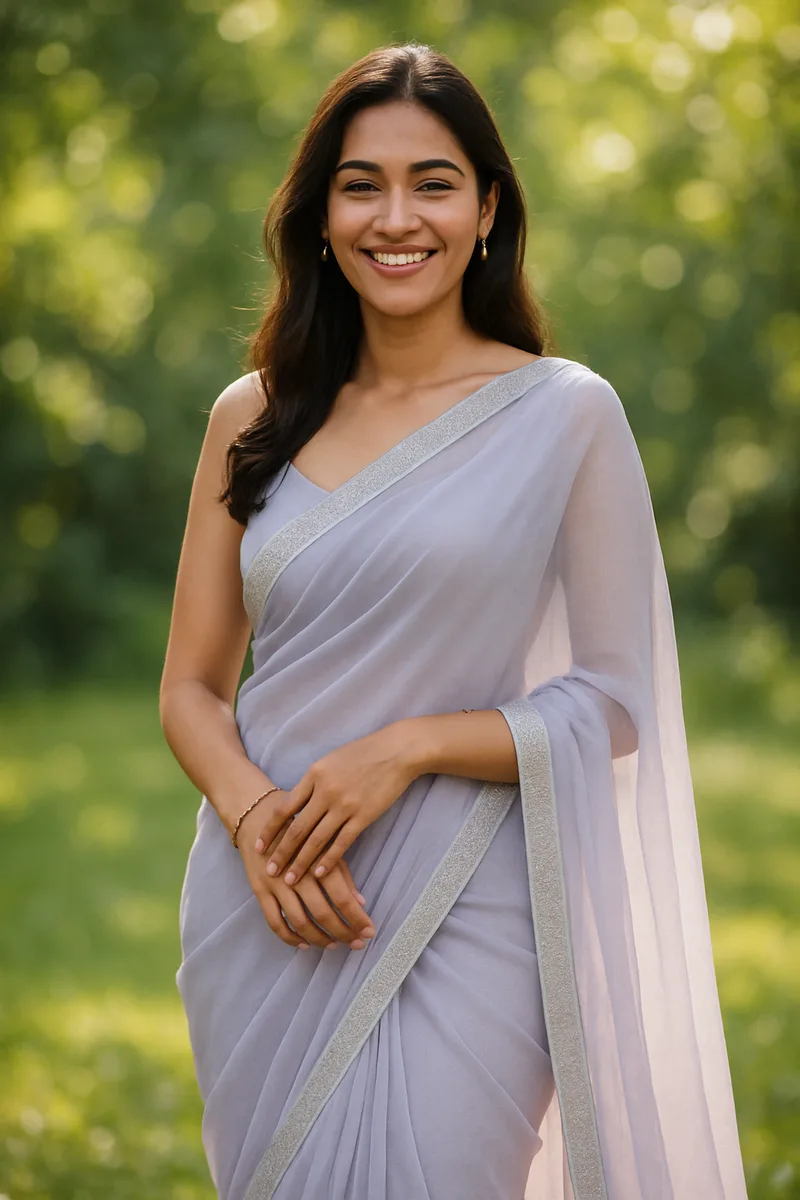
AI virtual try-on is transforming how wedding wear is sold online in India. Bridal lehenga sellers, sherwani brands, and wedding boutiques can now generate photorealistic model images of their designs without expensive photoshoots — cutting catalog creation costs by 90% while producing marketplace-ready images in seconds.
India's wedding wear market is valued at over $50 billion and growing rapidly as more brides, grooms, and their families turn to online shopping for wedding outfits. Yet the biggest obstacle for wedding wear sellers remains the same: photography. A single bridal lehenga photoshoot can cost more than the garment itself, and the traditional model of hiring models, makeup artists, stylists, and renting venues is simply not scalable for boutiques managing hundreds of SKUs across wedding seasons.
This guide explores how AI virtual try-on technology is solving this problem for every category of wedding wear — from bridal lehengas and sherwanis to wedding sarees, anarkalis, and Indo-western fusion outfits. Whether you are a large wedding wear brand or a small boutique selling through Instagram and marketplaces, this article covers how to use AI try-on to build a professional wedding wear catalog at a fraction of the traditional cost.
Why is wedding wear photography so expensive in India?
Wedding wear photography is the most expensive category in fashion product photography. The garments themselves are complex — heavy embroidery, delicate fabrics, multiple components (lehenga skirt, blouse, dupatta), and intricate detailing that must be clearly visible to justify the premium price tag. This complexity drives up every element of the production cost.
Here is a realistic cost breakdown for a single bridal collection photoshoot in India:
- Bridal model fees: Rs. 10,000 - 50,000 per day. Experienced bridal models who know how to pose in heavy lehengas and carry bridal jewelry command premium rates. For a full bridal look, you typically need a model comfortable wearing 5-10 kg of garment weight and heavy jewelry for extended periods.
- Specialized draping experts: Rs. 3,000 - 8,000 per day. Unlike western wear, Indian bridal garments require skilled draping. A lehenga's dupatta placement, a saree's pallu arrangement, or a sherwani's stole draping all need an expert who understands how the fabric should fall for the best visual impact. This is a specialized skill that adds significant cost.
- Jewelry and accessory styling: Rs. 2,000 - 10,000 per day. Bridal photography is incomplete without maang tikka, nath, chooda, kalire, and statement necklaces. Renting or sourcing bridal jewelry for photoshoots adds a layer of cost and logistics that casual wear photography never deals with.
- Makeup and hair: Rs. 5,000 - 15,000 per day. Bridal makeup is a separate art form. The makeup artist needs to create a look that photographs well under studio lighting while complementing the specific color palette and embroidery style of each lehenga. Multiple outfit changes often require partial makeup adjustments.
- Studio or venue rental: Rs. 5,000 - 25,000 per day. Wedding wear looks best against elaborate backdrops — palatial settings, garden venues, or studios with controlled lighting. Outdoor location shoots at heritage properties or luxury hotels add travel, permits, and weather dependency.
- Post-production editing: Rs. 3,000 - 15,000 per collection. Wedding wear images require meticulous retouching — color accuracy for embroidery threads, detail enhancement for zardozi and stonework, background cleanup, and skin retouching. Each image may need 30-60 minutes of editing time.
Total cost per collection photoshoot: Rs. 25,000 - 1,00,000, depending on collection size, model tier, and venue. For a boutique launching 4-6 collections per year across wedding and festive seasons, this amounts to Rs. 1,50,000 - 6,00,000 annually on photography alone — often exceeding the margin on the garments being photographed.
This cost structure creates a significant barrier to entry for smaller boutiques and designers. Many resort to flat-lay photography or mannequin shots, which dramatically underrepresent the garment and lead to lower conversion rates. A bridal lehenga photographed on a flat surface simply cannot convey how the flare falls, how the embroidery catches light, or how the dupatta drapes across the shoulder. The result: high-quality garments with low-quality photography, lost sales, and frustrated sellers.
How does AI virtual try-on work for wedding outfits?
AI virtual try-on uses advanced image generation models to place a garment onto a model's body in a photorealistic way. The technology has matured significantly in 2025-2026, and what was once limited to simple t-shirts and casual wear now handles the most complex garments in Indian fashion — including heavily embroidered bridal lehengas and structured sherwanis. If you want a deeper technical understanding, our guide on how AI virtual try-on works covers the fundamentals in detail.
Here is how the process works for wedding wear specifically:
Step 1: Garment Analysis
When you upload a wedding garment image, the AI analyzes the garment's structure, fabric type, color palette, and embellishment details. For a bridal lehenga, this means identifying the skirt's flare and volume, the blouse's neckline and sleeve style, and the dupatta as a separate component. For a sherwani, the AI identifies the collar style, button line, length, and fabric texture.
Step 2: Embroidery and Detail Rendering
This is where wedding wear AI try-on has improved most dramatically. The AI now renders:
- Zardozi and metallic thread work: The raised, three-dimensional quality of zardozi embroidery is preserved, including how gold and silver threads catch light at different angles. The AI understands that these elements create shadows and highlights that flat fabric does not.
- Gota patti and mirror work: Reflective elements like gota patti strips and mirror work (shisha) are rendered with appropriate light reflections, maintaining the sparkle and shine that makes these garments distinctive in photographs.
- Sequin and stonework: Individual sequins, kundan stones, and crystal embellishments are rendered with proper light scatter, creating the shimmering effect that bridal garments are known for.
- Thread embroidery: Detailed patterns in resham, aari, and chikankari work are preserved with color accuracy and stitch texture visible at catalog-resolution zoom levels.
Step 3: Draping and Fabric Physics
Draping is arguably the most critical element for wedding wear photography. A lehenga's appeal lies in how the skirt flares, how the dupatta cascades over the shoulder, and how the fabric moves. The AI models garment physics to simulate realistic draping:
- Dupatta draping: The AI positions the dupatta in a natural, aesthetically pleasing arrangement — over one shoulder, across the arms, or pinned to the head for a traditional bridal look. For more on draping nuances, see our article on AI saree draping and virtual try-on.
- Lehenga flare: The circular or paneled construction of lehengas creates a distinctive bell-shaped silhouette. The AI renders this volume accurately, including how heavier fabrics like velvet and raw silk fall differently from lighter fabrics like georgette and organza.
- Fabric weight and movement: A net dupatta moves differently from a velvet one. Silk has a sheen that cotton does not. The AI accounts for fabric properties to produce images that feel true to the material.
Step 4: Jewelry and Accessory Coordination
Bridal photography is incomplete without jewelry. While AI try-on focuses primarily on garment visualization, you can use reference images and prompts to guide the overall bridal look, including jewelry styling, to create a complete bridal catalog image that looks like it came from a professional photoshoot.
Upload your lehenga or sherwani image, choose a model, and generate a photorealistic catalog shot instantly. 5 free credits, no card needed.
Try Free Now →
Which wedding garments work with AI try-on?
Not all wedding garments produce identical results with AI virtual try-on. Some categories are inherently easier for the technology due to their structure, while others present unique challenges. Here is an honest assessment of how each major wedding wear category performs, so you can set realistic expectations for your catalog.
Bridal Lehengas
Lehengas are the highest-demand category for AI wedding wear try-on, and the results are strong. The defined three-piece structure (skirt, blouse, dupatta) gives the AI clear components to work with. Heavy embroidery and embellishments are rendered with impressive detail, capturing the light play on zardozi and sequin work. The main variable is dupatta placement — different draping styles can produce varying results, so providing a reference image showing your preferred dupatta arrangement helps the AI deliver consistent output.
Result quality: Excellent. Lehengas are one of the best-performing categories for AI try-on, especially in front-facing poses where the full embroidery panel and skirt flare are visible.
Sherwanis and Men's Wedding Wear
Sherwanis produce some of the most consistently accurate AI try-on results. Their structured, tailored silhouette — defined collar, button line, and hem length — makes them easier for the AI to map onto a model body compared to draped garments. Embroidery on sherwanis (typically concentrated on the collar, front panel, and cuffs) is rendered cleanly because these are flat, defined areas.
Result quality: Excellent. Structured menswear is among the easiest categories for AI try-on. Kurta-pajama sets and Nehru jackets also perform very well.
Wedding Sarees
Sarees are complex draped garments with many variables — the pallu style, the number of pleats, the way the fabric wraps around the body. AI try-on handles sarees well for standard draping styles (Nivi, Gujarati), though highly unusual draping methods may not render perfectly without specific reference guidance. The border and pallu embroidery are typically the focal points, and these render accurately. For a deep dive into saree-specific results, read our guide on AI saree draping and virtual try-on.
Result quality: Very good. Standard draping styles produce excellent results. Experimental draping may need iteration.
Anarkali Suits
Anarkali suits are structurally simpler than lehengas — a single long, flowing garment with a fitted bodice and flared skirt. This simplicity works in favor of AI try-on. The key detail elements (neckline embroidery, waist panel, border work) are in defined positions, and the flowing skirt renders naturally on standing poses. Paired with a matching dupatta, anarkalis produce clean, catalog-ready results consistently.
Result quality: Excellent. The defined silhouette and predictable drape make anarkalis one of the most reliable categories.
Wedding Gowns and Indo-Western Fusion
Indo-western gowns — including trail gowns, jacket lehengas, cape gowns, and fusion silhouettes — are increasingly popular for reception wear and destination weddings. These garments benefit from having a more structured, western-influenced silhouette that AI models handle very well. The main consideration is unconventional elements like asymmetric hemlines, detachable capes, or exaggerated trains, which may require specific pose selection to look natural.
Result quality: Very good to excellent. Standard gown silhouettes produce outstanding results. Avant-garde or highly unconventional designs may need prompt refinement.
Comparison Summary
| Garment Type | AI Try-On Quality | Best For | Key Consideration |
|---|---|---|---|
| Bridal Lehengas | Excellent | Front-facing, full-body shots | Provide dupatta draping reference |
| Sherwanis | Excellent | All poses and angles | Structured fit renders very accurately |
| Wedding Sarees | Very Good | Standard Nivi/Gujarati draping | Specify draping style for best results |
| Anarkali Suits | Excellent | Standing and walking poses | Simple structure produces consistent output |
| Wedding Gowns | Very Good | Front and three-quarter poses | Asymmetric designs may need iteration |
| Nehru Jackets | Excellent | All angles | Pair with kurta for complete look |
How are wedding wear sellers using AI try-on?
AI virtual try-on is not just a cost-saving tool — it is enabling entirely new workflows and business models for wedding wear sellers. Here are the primary use cases we are seeing in 2026.
Online Boutiques Generating Full Catalogs
The most straightforward use case: boutiques and designers using AI try-on to photograph their entire wedding collection without hiring a single model. A boutique with 200 lehenga designs can generate model-on images for every SKU in 1-2 days, compared to 2-4 weeks with traditional photography. This is particularly valuable for sellers on marketplaces like Myntra, Amazon, and Flipkart, where listings with model-on images see 2-3x higher click-through rates than flat-lay or mannequin images.
The economics are compelling. Photographing 200 lehengas traditionally would cost Rs. 2-5 lakhs at minimum. With AI try-on, the same catalog can be produced for under Rs. 15,000 — a 90%+ reduction that makes professional photography accessible to even the smallest boutiques. Many sellers who previously relied on phone camera flat-lays are now producing catalog-quality images that compete visually with established brands. For more on why traditional product photography is so expensive, see our detailed cost analysis.
Brides Previewing Outfits Before Visiting Stores
A growing number of bridal boutiques are using AI try-on as a pre-visit engagement tool. When a bride inquires about a lehenga, the boutique can generate a quick visualization showing how the garment looks on a model with a similar body type. This gives the bride a more realistic preview than a flat-lay image and increases the likelihood of an in-store visit. Some boutiques report a 30-40% increase in store visit conversion when they share AI try-on images via WhatsApp rather than standard product photos.
Designers Testing Colorways Before Production
Wedding wear designers often create a base design and then produce it in 5-10 color variations. Traditionally, they would need to produce all variations before photographing them. With AI try-on, designers can visualize how the same embroidery pattern looks in different color combinations before committing to production. This reduces inventory risk — instead of producing 10 colors and finding that 3 do not sell, the designer can test market response to AI-generated images and then produce only the colors that attract buyer interest.
Marketplaces Requiring Model Shots
Major Indian fashion marketplaces increasingly require or strongly prefer model-on images for wedding wear listings. Myntra's premium wedding wear category mandates model photography. Amazon's A+ Content performs significantly better with lifestyle model shots. Without model images, wedding wear listings are either rejected or buried in search results. AI try-on solves this requirement at a cost that even small sellers can afford, leveling the playing field between a two-person home business and an established brand with a photography budget. For practical tips on shooting garment images that feed well into AI tools, read our guide on how to photograph sarees and kurtas without a model.
Social Media and Instagram Marketing
Wedding wear marketing on Instagram requires a constant stream of fresh visual content — reels showing different lehengas, carousel posts comparing color options, story polls asking followers to choose between designs. AI try-on provides the volume of imagery needed to sustain daily posting without weekly photoshoots. A boutique can generate 10-20 new model-on images per day, each with different poses and backgrounds, keeping their Instagram feed active and engaging throughout the wedding season.
Step-by-step: Creating wedding wear catalog images with AI
Here is the complete workflow for generating wedding wear catalog images using CatalogX, from garment photography to marketplace-ready output.
Step 1: Photograph Your Garment
Start with a clear image of the garment. For wedding wear, pay attention to these details:
- Lehengas: Photograph the skirt spread out to show the full embroidery panel. Photograph the blouse separately if it has detailed work. Include the dupatta laid flat showing the border and pallu.
- Sherwanis: Hang on a wide-shoulder hanger or photograph on a mannequin. Ensure the collar, button panel, and cuff embroidery are clearly visible.
- Sarees: Lay the saree showing the pallu section and border. Photograph the blouse piece separately if it has embroidery.
- Lighting: Use natural daylight or two softbox lights positioned at 45 degrees. Avoid direct flash, which washes out embroidery texture and creates harsh reflections on metallic thread work.
- Background: A plain white or neutral background works best. Avoid busy backgrounds that make it harder for the AI to separate the garment from the surroundings.
Step 2: Upload to CatalogX
Log in to CatalogX and upload your garment image. Select the garment type — lehenga, sherwani, saree, etc. — so the AI applies the appropriate draping and styling logic. For lehengas, you can optionally upload a reference image showing your preferred dupatta draping style.
Step 3: Select Model and Background
Choose from CatalogX's diverse model library. For bridal wear, select models that match your target customer demographic. You can choose between clean studio backgrounds (white, cream, gray) for marketplace listings, or lifestyle backgrounds (palatial interiors, garden settings, warm lighting) for website and social media imagery.
Step 4: Generate and Review
Click generate and receive your photorealistic model-on image in under 60 seconds. Review the output for embroidery accuracy, color fidelity, and draping naturalness. CatalogX's virtual try-on feature produces images at full catalog resolution, ready for immediate upload to any marketplace or website.
Step 5: Export for Multiple Channels
Download your images optimized for different platforms — high-resolution for your website, marketplace-compliant dimensions for Myntra and Amazon, and square crops for Instagram and WhatsApp catalogs. One generation session produces images usable across all your sales channels.
AI try-on vs traditional bridal photoshoot: Cost and quality comparison
The cost difference between AI try-on and traditional bridal photography is dramatic. Here is a side-by-side comparison for a typical wedding wear catalog of 50 garments.
| Cost Component | Traditional Photoshoot | AI Try-On (CatalogX) |
|---|---|---|
| Model fees | Rs. 20,000 - 50,000 | Rs. 0 |
| Makeup & hair | Rs. 5,000 - 15,000 | Rs. 0 |
| Draping expert | Rs. 3,000 - 8,000 | Rs. 0 |
| Jewelry rental | Rs. 2,000 - 10,000 | Rs. 0 |
| Studio/venue | Rs. 5,000 - 25,000 | Rs. 0 |
| Photographer | Rs. 10,000 - 30,000 | Rs. 0 |
| Post-production | Rs. 5,000 - 15,000 | Rs. 0 |
| Image generation | Rs. 0 | Rs. 3,000 - 15,000 |
| Total for 50 garments | Rs. 50,000 - 1,50,000 | Rs. 3,000 - 15,000 |
| Turnaround time | 2 - 4 weeks | 1 - 2 days |
| Images per garment | 3 - 5 | Unlimited (per credit) |
The savings are even more dramatic when you consider that wedding wear sellers typically need to refresh their catalogs 3-4 times per year — pre-wedding season, peak season, reception/sangeet collections, and off-season clearance. Each refresh with traditional photography is another Rs. 50,000-1,50,000. With AI try-on, it is another Rs. 3,000-15,000.
Quality Considerations
The cost savings are clear, but what about quality? Here is an honest comparison:
- Where AI wins: Consistency across the catalog (every image has identical lighting, background, and quality), speed (minutes vs weeks), ability to generate multiple variations (different backgrounds, poses) from one source image, and no weather or scheduling dependencies.
- Where traditional wins: Extremely unique or avant-garde garment constructions that the AI has not seen before, capturing specific in-person fabric draping that is highly customized, and creating video content (AI try-on is currently photo-only for most tools).
- Where they are equal: For standard wedding wear catalog images — front-facing, three-quarter, and full-body shots on clean backgrounds — AI try-on output is indistinguishable from professional studio photography to most online shoppers. Embroidery detail, color accuracy, and fabric texture are all rendered at commercial quality levels.
Most wedding wear sellers find that AI try-on handles 90-95% of their catalog photography needs. For flagship pieces or hero images for marketing campaigns, some sellers still commission traditional photoshoots — but these are now 1-2 shots per season rather than full catalog productions.
When is the best time to publish wedding wear content?
Timing is critical in wedding wear e-commerce. India's wedding season follows a predictable calendar driven by auspicious dates (muhurat), weather, and cultural traditions. Understanding this calendar helps sellers plan their catalog preparation, inventory, and marketing activity for maximum impact.
Peak Wedding Season: October - February
This is the primary Indian wedding season — the five months when the majority of Indian weddings take place. The period includes Navratri (October), the post-Diwali wedding rush (November-December), and the winter wedding months (January-February). During this window, wedding wear search volume on Google and marketplace platforms peaks, and competition for buyer attention is fiercest.
By the time peak season arrives, your catalog should be fully built, optimized, and live. Sellers who are still photographing products in October have already lost 3-4 weeks of the buying window. This is where AI try-on's speed advantage is most valuable — even if your designs are finalized in September, you can have a complete, marketplace-ready catalog within 48 hours.
Pre-Season Buying: July - September
Smart brides and wedding planners start shopping 3-6 months before the wedding date. For an October-November wedding, shopping begins in July-August. This pre-season window is increasingly important because of two trends: early-bird discounts offered by sellers and the growing preference for customized bridal wear that requires production lead time.
Sellers who have their catalogs ready by July capture this early-buying segment with less competition. AI try-on makes this timeline realistic — you can generate catalog images for your new collection as soon as your first samples are ready, rather than waiting until the full collection is produced and a photoshoot can be arranged.
Off-Season: March - June
The March-June period is traditionally the off-season for wedding wear, though destination weddings and summer functions have made this less pronounced. This period is ideal for:
- Clearance sales: Generate fresh marketing images for end-of-season discounts on previous collections.
- Catalog preparation: Use the quiet months to photograph and generate AI images for your upcoming wedding season collection. Sellers who prepare catalogs in April-June are ready to go live the moment pre-season buying begins in July.
- Content marketing: Publish blog posts, style guides, and social media content about wedding fashion trends for the upcoming season. AI-generated images make it easy to create visual content without production delays.
- A/B testing: Test different image styles (lifestyle vs studio background, different model choices, various poses) during the low-traffic period so you know what converts best before the high-stakes peak season.
Seasonal Planning Calendar
| Month | Activity | Priority |
|---|---|---|
| March - May | Design new collection, source samples | Production |
| June - July | Generate AI catalog images, build listings | Catalog creation |
| August | Go live on all platforms, start pre-season marketing | Launch |
| September | Ramp up advertising, Instagram/social push | Marketing |
| October - February | Peak selling, add new designs as needed, refresh ads | Sales |
| March | Clearance, review analytics, plan next season | Review |
The future of wedding wear e-commerce
AI virtual try-on for wedding wear is still in its early stages, and several trends are shaping where this technology is headed over the next 2-3 years.
Virtual Try-On for Brides
The current generation of AI try-on is primarily used by sellers to generate catalog images. The next evolution is consumer-facing try-on — where brides upload their own photo and see themselves wearing the lehenga. This moves AI try-on from a photography replacement tool to a shopping experience tool. Several platforms are already experimenting with this, and it is likely to become a standard feature on wedding wear e-commerce sites by 2027-2028. The impact on conversion rates could be transformative — a bride who can see herself in a lehenga is far more likely to purchase than one looking at a generic model.
Video Try-On and Movement Visualization
Static images, even photorealistic ones, cannot fully convey how a lehenga moves during a wedding ceremony or how a sherwani looks in motion during a baraat. Video try-on — where AI generates short clips showing the garment in motion on a model — is an active area of development. Early implementations show garment physics simulation (how the fabric flows, how embroidery catches light at different angles), and the technology is rapidly improving. Within 2-3 years, sellers may be able to generate 10-15 second video clips of their garments on models, providing a far more engaging shopping experience than any static photo.
3D Visualization and AR
Augmented reality try-on — where a bride holds her phone up and sees a lehenga overlaid on her body in real-time through the camera — is being actively developed by major technology companies. While current AR try-on works well for accessories (jewelry, watches, sunglasses), full-body garment AR remains technically challenging due to body pose estimation, fabric physics, and real-time rendering requirements. However, the pace of progress suggests this could become commercially viable for wedding wear within the next 3-4 years.
Personalized Recommendations
As AI try-on data accumulates, platforms will be able to analyze which styles, colors, and embroidery patterns perform best for different body types, skin tones, and regional preferences. This means sellers will be able to generate not just any model-on image, but the optimal image for their target customer segment — choosing the model, pose, and background that data shows converts best for a specific garment category and price point.
The wedding wear industry is at an inflection point. Sellers who adopt AI try-on now are not just saving money on photography — they are building the operational infrastructure (workflows, image libraries, marketplace presence) that will position them for these future capabilities. Those who wait will find themselves playing catch-up in a market that increasingly demands speed, scale, and visual quality.
Frequently Asked Questions
Yes, modern AI virtual try-on tools like CatalogX can render heavy embroidery, zardozi work, gota patti, and sequin detailing on bridal lehengas. The AI analyzes the source garment image and reproduces the intricate patterns, texture, and light reflections when generating the model-on image. For best results, photograph the lehenga in even lighting that clearly shows the embroidery details.
A traditional bridal collection photoshoot costs between 25,000 and 1,00,000 rupees depending on model fees, styling, venue, and post-production. AI virtual try-on with CatalogX costs as low as 60 rupees per image on the Pro plan. A 50-piece wedding collection catalog that would cost 50,000-1,00,000 with traditional photography can be produced for under 5,000 with AI — a savings of over 90%.
Yes, AI virtual try-on works well for sherwanis, kurta-pajama sets, Nehru jackets, Indo-western suits, and other men's wedding wear. Structured garments like sherwanis actually produce some of the best AI try-on results because their defined shapes and tailored fits are easier for the AI to render accurately on a model.
While CatalogX is primarily designed for sellers and brands to generate catalog images, the technology can be used by brides to get an approximate preview of how a lehenga or bridal outfit might look. Upload your own photo along with the garment image to see a visualization. However, results are best suited for catalog and marketing purposes rather than exact personal fit prediction.
Lehengas, sherwanis, anarkali suits, wedding gowns, and sarees all work well with AI try-on. Structured garments like sherwanis and gowns tend to produce the most consistently accurate results. Draped garments like sarees and dupattas also work well, though the AI may interpret draping differently from how a stylist would arrange them. For best results, include a reference image showing the desired draping style.
The Indian wedding season peaks from October to February, with buying activity starting as early as July-September. Sellers should have their complete catalogs ready by August-September to capture early shoppers. AI virtual try-on makes this timeline achievable — you can generate a full collection catalog in a single day rather than spending weeks coordinating traditional photoshoots.