Meesho has quietly become India's largest e-commerce platform by order volume, processing over 2 million orders daily. While Amazon and Flipkart dominate urban e-commerce, Meesho owns Tier 2-4 India — the small towns and cities where 70% of India's population lives. For fashion sellers, this represents a massive, under-served market.
What makes Meesho particularly attractive for new sellers is its 0% commission model. Unlike Amazon (17-20% commission) or Flipkart (10-15%), Meesho charges zero commission on sales. You keep your entire selling price minus shipping costs. This guide covers everything you need to start selling fashion on Meesho profitably.
Meesho's 0% Commission Model Explained
Meesho's business model is fundamentally different from other Indian marketplaces. Here's how it works:
- Zero commission: Meesho doesn't take a percentage of your sales. Your listed price minus shipping costs is what you receive.
- Revenue model: Meesho makes money through advertising (promoted listings), logistics markups, and payment processing fees — not from seller commissions.
- Shipping costs: You pay for shipping, which varies by weight, distance, and delivery speed. Typical fashion shipping costs range from 30-70 per order.
- No hidden fees: No catalog listing fees, no subscription charges, no penalty fees for slow-moving inventory.
The Reseller Model
Meesho's original model was built around social commerce — resellers (mostly homemakers and small entrepreneurs) browse the catalog, share products on WhatsApp, and earn a margin on each sale. While Meesho has since launched direct-to-consumer shopping through its app, resellers still drive a significant portion of sales.
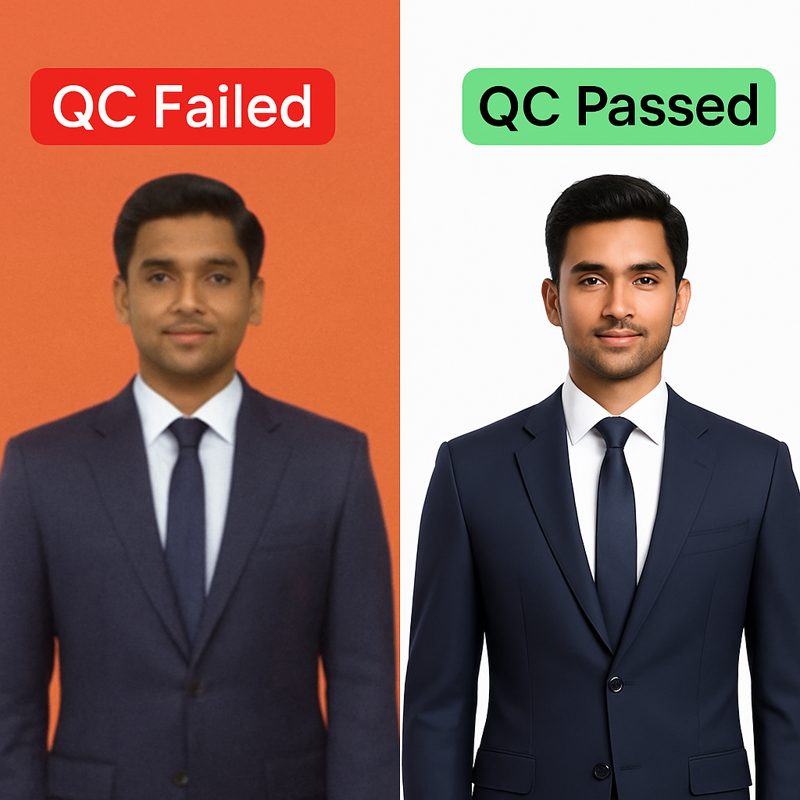
This means your product images serve double duty: they need to look good in the Meesho app and in WhatsApp messages shared by resellers. Clean, well-lit, attractive product photos are essential for both channels.
Seller Registration Walkthrough
Meesho's registration process is simpler than Amazon or Flipkart. Here's what you need:
Documents Required
- GST number: A valid GSTIN is mandatory.
- Bank account: Current or savings account in the business name. Meesho deposits payments every 7-15 days depending on your performance tier.
- PAN card: Personal or business PAN.
- Address proof: For pickup location verification.
Registration Steps
- Go to supplier.meesho.com and click "Start Selling."
- Enter your mobile number and verify with OTP.
- Fill in GST details — Meesho auto-verifies your GSTIN against the government database.
- Add your bank account details for payment settlement.
- Set up your pickup address — this is where Meesho's courier partners will collect orders.
- Your account is typically active within 24-48 hours.
Unlike Amazon, Meesho doesn't require category approval for fashion. Once your account is active, you can start listing clothing, footwear, and accessories immediately.
Catalog Creation & Image Requirements
On Meesho, products are organized into "catalogs." Each catalog is a group of related products — typically color or size variants of the same design. Understanding catalog structure is key to getting visibility on the platform.
Catalog Structure
- One catalog = one product design with multiple variants (color, size).
- Each catalog needs a minimum of 1 image and maximum of 6 images.
- Meesho recommends at least 4 images per catalog: front view, back view, detail shot, and lifestyle/context image.
- Catalogs with 4+ images get 25-40% more views than single-image catalogs.
Image Specifications
| Specification | Requirement |
|---|---|
| Minimum size | 800 x 800 px |
| Recommended size | 1080 x 1440 px |
| Aspect ratio | 3:4 (portrait) preferred. 1:1 accepted. |
| Background | White preferred but not strictly enforced. Clean, uncluttered backgrounds work. |
| Format | JPEG or PNG |
| Max file size | 5 MB per image |
| Prohibited | No collages, no heavy text overlays, no watermarks with contact info |
Meesho has the most relaxed image requirements of any major Indian marketplace. But "relaxed requirements" doesn't mean low-quality images perform well. In fact, the opposite is true: because many Meesho sellers upload phone camera photos with poor lighting, professional-quality images stand out dramatically.
What Makes a Meesho Product Image Convert
Meesho's audience is predominantly Tier 2-4 India. The visual expectations differ from premium platforms like Myntra:
- Show the full garment clearly: Front and back views are essential. Buyers want to see exactly what they're getting — no artistic cropping.
- Accurate colors: Color mismatches are the #1 complaint on Meesho. Ensure white balance is correct and the fabric color in the image matches reality.
- Model-on shots outperform flat-lays: Even on Meesho, products shown on models get significantly higher engagement. Model shots help buyers visualize the fit, length, and drape.
- Include close-up details: Show fabric texture, embroidery work, print detail — anything that communicates quality.
- Keep backgrounds clean: A white or light background looks more professional than a busy room or outdoor setting.
CatalogX generates model-on shots for 299 per image — making professional photography accessible to every Meesho seller, not just big brands.
Try Free — 5 Credits →
Pricing Strategy for the Reseller Model
Pricing on Meesho requires a different approach than Amazon or Flipkart. The reseller model adds a layer between you and the end customer, and this affects how you should price.
How Reseller Pricing Works
- You set a base price for your product (say 399).
- The reseller adds their margin when sharing with customers (say 50-100).
- The end customer sees the reseller's price (449-499).
- Meesho charges shipping to the customer separately.
- You receive your base price minus Meesho's shipping deduction.
Pricing Guidelines
- Research competitors: Search for similar products on Meesho and note the price range. Fashion on Meesho is price-sensitive — the sweet spot for ethnic wear is 299-799, western wear 249-599.
- Factor in returns: Meesho's return rate for fashion averages 15-25%. Your pricing needs to absorb this. If 1 in 5 orders is returned, your profitable orders need to cover the logistics cost of returns.
- Leave room for reseller margin: Resellers typically add 10-25%. If your product is already at the market ceiling, resellers can't add margin, and they won't promote it.
- Volume over margin: Meesho's strength is volume. A lower-priced product that sells 100 units/day is more profitable than a higher-priced product that sells 10 units/day, even with thinner margins per unit.
| Category | Price Sweet Spot | Avg. Daily Volume (Good Seller) |
|---|---|---|
| Kurta/Kurti | 349 - 599 | 50-200 units |
| Sarees | 299 - 799 | 30-100 units |
| T-Shirts | 199 - 399 | 50-300 units |
| Dress Material | 249 - 499 | 40-150 units |
| Western Dresses | 349 - 699 | 30-100 units |
Product Photography on a Budget
Most Meesho sellers are small manufacturers or resellers operating on thin margins. A 1-2 lakh photoshoot isn't feasible. Here are practical alternatives:
DIY Phone Photography
- Natural light: Shoot near a large window during daytime. Overcast days provide the softest, most even lighting.
- White background: A white bedsheet or chart paper works for flat-lays. For model shots, shoot against a plain white wall.
- Stability: Use a cheap phone tripod (available for 300-500 on Amazon). Hand-held photos are usually blurry.
- Multiple angles: Always shoot front, back, and at least one close-up. These three images are the minimum for a competitive catalog.
AI-Generated Model Shots
For sellers who can't hire models or don't have access to a studio, AI virtual try-on tools offer a practical middle ground. Instead of shooting on a live model, you upload a flat-lay or mannequin photo, and the AI generates a realistic model-on image.
This approach works particularly well for Meesho sellers because:
- Cost-effective: At 299 per generation with CatalogX, the cost is comparable to basic DIY photography but with professional studio-quality output.
- Speed: Generate images for a new catalog in minutes, not days. Critical for sellers adding 10-20 new products per week.
- Consistency: Every image has consistent lighting, background, and quality — unlike DIY phone photography where conditions vary shot to shot.
- No model coordination: No need to find, book, or pay models. Especially valuable for ethnic wear where finding models comfortable with all garment types can be challenging.
Common Mistakes New Meesho Sellers Make
- Listing too many similar products: Uploading 50 catalogs of nearly identical kurtas dilutes your own visibility. Focus on distinct designs and limit variants to genuine differences (color, size).
- Phone camera photos with bad lighting: The most common mistake. Dark, yellowish, or blurry photos get scrolled past instantly. Even basic lighting improvements (natural daylight + white background) make a significant difference in click-through rates.
- Ignoring catalog quality score: Meesho assigns a quality score to each catalog based on image quality, description completeness, and pricing. Low-quality catalogs get less visibility in search results. Check your quality score in the Meesho Supplier Hub and improve low-scoring catalogs.
- Wrong product descriptions: Copy-pasting descriptions from competitors or writing vague descriptions ("beautiful kurta, best quality") hurts search visibility. Include specific details: fabric type, pattern, occasion, wash care, actual measurements.
- Not tracking returns: High return rates eat into margins fast. Track which products get returned most and why. Common reasons: color mismatch (fix your photography), sizing issues (add detailed size charts), fabric quality disappointment (be honest in descriptions).
- Slow dispatch: Meesho penalizes sellers who don't dispatch within 2 days. Consistently slow dispatch lowers your visibility and can lead to account restrictions. Keep ready stock for all listed products.
- Pricing without accounting for returns: If your margin is 50 per unit and your return rate is 20%, your effective margin is only 40 per unit (after absorbing return shipping costs). Many new sellers don't account for this and wonder why they're not profitable.
How CatalogX Helps at 299 vs 2L Photoshoots
Traditional product photography for fashion involves a studio, photographer, models, styling, and post-production. For a catalog of 50 products, you're looking at 1.5-2.5 lakhs and 2-3 weeks of turnaround. For most Meesho sellers — small manufacturers, home-based businesses, and resellers — this isn't financially viable.
CatalogX bridges this gap:
- Upload a garment photo: Flat-lay, hanger, or mannequin shot. Even a phone camera photo works as the source.
- Pick a model and background: Choose from diverse AI models and clean, professional backgrounds.
- Generate: Get a photorealistic model-on shot in under a minute.
- Export for Meesho: Output at 1080x1440px with a clean white background — exactly what Meesho recommends.
At 299 per generation (or as low as 60 per image on the Pro plan), you can create professional catalog images for 50 products at a fraction of what a single traditional photoshoot would cost. More importantly, you can add new products to your Meesho catalog the same day you receive inventory — no waiting for studio availability or post-production.
Related Articles
- How to Sell Fashion on Amazon India: Complete Seller Guide 2026
- Myntra Seller Guide: Image Requirements & Listing Optimization 2026
- The Exact Image Sizes Every Indian Marketplace Requires in 2026
Frequently Asked Questions
No, Meesho operates a 0% commission model. You keep your entire selling price minus shipping costs, which typically range from 30-70 rupees per order for fashion. Meesho makes revenue through advertising, logistics markups, and payment processing fees instead of seller commissions.
Meesho requires minimum 800x800 pixel images, with 1080x1440 pixels recommended. The preferred aspect ratio is 3:4 portrait. White backgrounds are preferred but not strictly enforced. Each catalog supports 1-6 images, and catalogs with 4 or more images get 25-40% more views.
Resellers browse the Meesho catalog, share products on WhatsApp with their personal network, and add their own margin (typically 10-25%) to your base price. The end customer sees the reseller's price. You receive your base price minus Meesho's shipping deduction. Leave room in your pricing for reseller margin.
To register as a Meesho seller, you need a valid GSTIN, PAN card, bank account in the business name, and address proof for pickup location verification. Registration is done at supplier.meesho.com, and your account is typically active within 24-48 hours. No category approval is needed for fashion.
The sweet spot for ethnic wear like kurtas is 349-599 rupees, sarees 299-799 rupees, and t-shirts 199-399 rupees. Meesho's Tier 2-4 audience is price-sensitive, so volume at competitive prices outperforms higher margins with lower sales. Factor in a 15-25% return rate when setting your prices.
Yes, AI-generated product photos work well on Meesho. Tools like CatalogX generate model-on shots for around 299 per image, producing professional studio-quality output that stands out from the typical phone camera photos on the platform. AI images offer consistent lighting and backgrounds across your entire catalog.