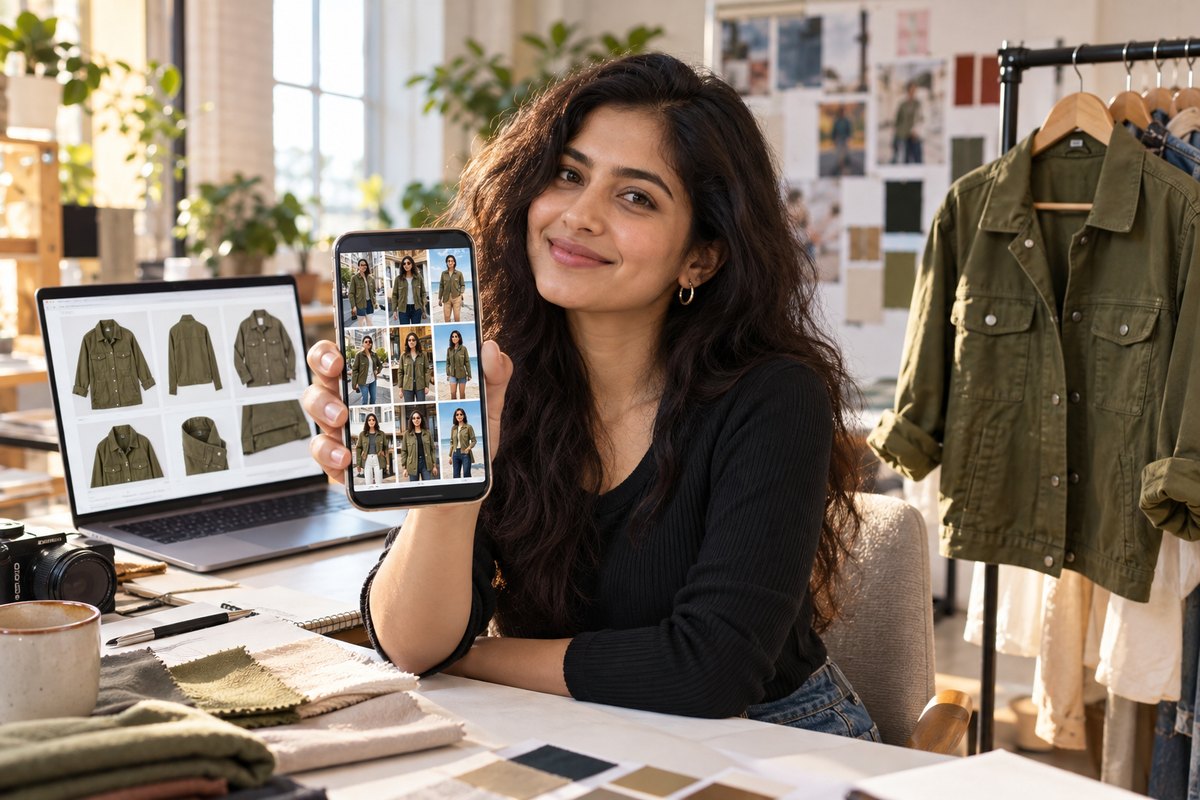
D2C (direct-to-consumer) fashion brands in India face a unique challenge: they need to produce high-quality product imagery for multiple channels simultaneously — their own website, marketplace listings, Instagram ads, WhatsApp catalogs, and more. Each channel has different requirements, and traditional photography makes it nearly impossible to optimize for all of them without a massive budget.
AI-generated mockups are solving this by letting brands produce channel-specific imagery from a single garment photo. Here's how D2C brands are using this across their marketing stack.
Marketplace Listings: The Foundation
For most D2C brands, marketplaces (Amazon, Flipkart, Myntra, Meesho) are the primary revenue channel. Marketplace listing requirements are specific:
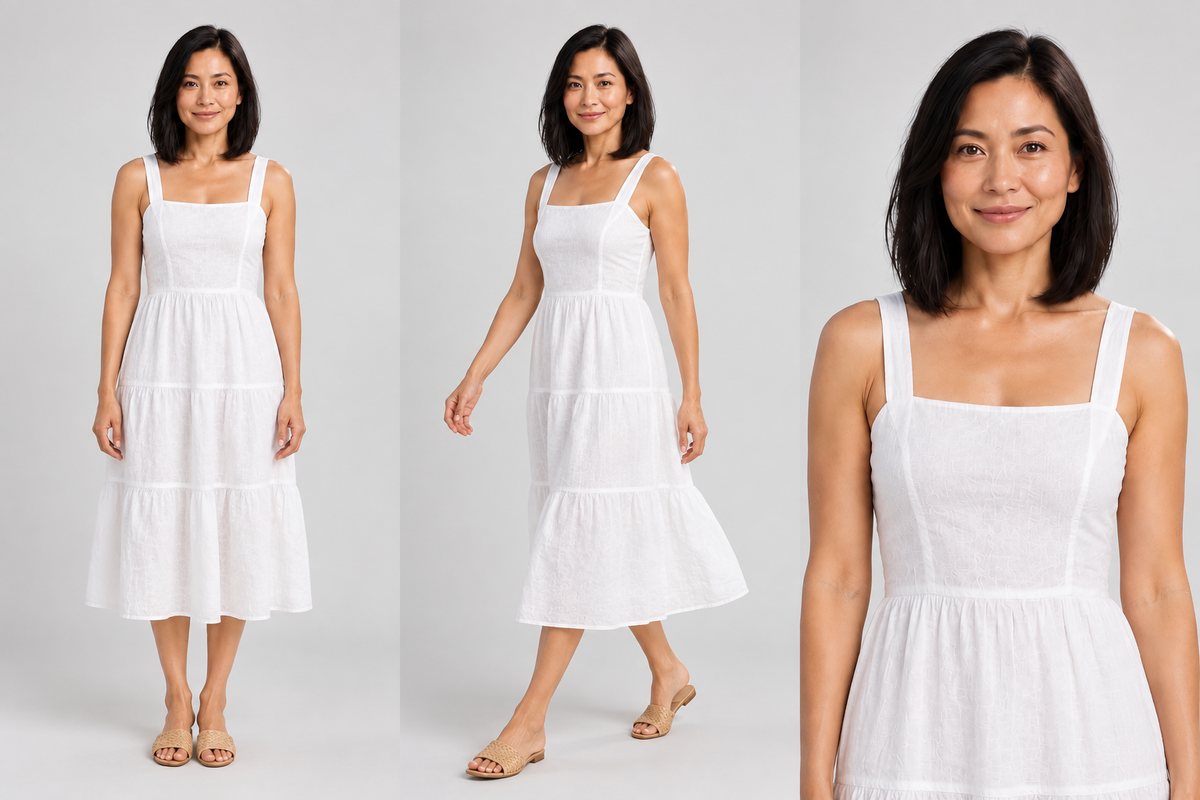
- Primary image: White or neutral background, full-body model shot, no text overlays.
- Supporting images: Multiple angles, close-up details, and at least one lifestyle shot.
- Consistency: All products in a category should have matching image styles — same model, same background, same lighting.
AI mockups handle all three requirements naturally. A brand can generate a consistent set of 4-5 images per SKU — front, side, back, close-up, lifestyle — using the same model and lighting style across their entire catalog. This level of consistency was previously only achievable by large brands with dedicated photography teams.
Instagram and Social Media Ads
Social media advertising is where AI mockups really shine for D2C brands. Here's why:
- Creative volume: Facebook and Instagram ad algorithms perform better with multiple creative variants. AI lets you generate 10-20 different images of the same product (different poses, backgrounds, angles) to test which creative performs best.
- Speed: When a product starts trending, you need fresh ad creatives immediately. AI generates them in minutes, not days.
- Lifestyle contexts: Social ads perform better with lifestyle imagery (outdoor, urban, festive backgrounds) rather than the plain white backgrounds used for marketplace listings. AI lets you generate lifestyle variants without a location shoot.
- Seasonal campaigns: Diwali, Eid, Christmas, wedding season — each requires themed visuals. Generate the same products with seasonal backgrounds and you're ready for every campaign.
D2C brands running Instagram ads typically need 3-5 new creatives per product per week to keep ads fresh. At traditional photography costs, that's unsustainable. With AI, it's routine.
Upload your garment and get a studio-quality AI mockup in 30 seconds. 5 free credits, no card needed.
Try Free Now →
Brand Website
Your own website has different image requirements than marketplaces:
- Hero banners: Large, lifestyle-oriented images that communicate brand aesthetic. AI can generate these with specific backgrounds and moods.
- Product pages: Similar to marketplace listings but with more creative freedom — colored backgrounds, editorial poses, and brand-specific styling.
- Category pages: Consistent thumbnail images across all products in a category. AI makes catalog-wide consistency trivial.
- Lookbooks: Curated collections shown in lifestyle contexts. Generate the same model in different outfits against a consistent backdrop.
WhatsApp Catalogs and Direct Sales
Many Indian D2C brands, especially in ethnic wear, generate significant revenue through WhatsApp. The image requirements here are different:
- Quick, clear images: Customers scrolling through WhatsApp want to see the garment clearly without zooming.
- Square format: WhatsApp images display best in square format — different from the portrait orientation used for marketplace listings.
- Multiple options: Customers often ask "what does it look like in a different color?" or "show me how it looks from behind." AI lets you generate these on-demand.
Print and Offline Marketing
D2C brands expanding into offline retail or running print campaigns need high-resolution images:
- Brochures and catalogs: Physical catalog pages need high-quality, print-resolution images with lifestyle settings.
- Store displays: Pop-up shops and retail spaces need large-format banner images featuring the brand's products.
- Packaging inserts: Many D2C brands include lookbook cards or catalog flyers in their shipments — all requiring product imagery.
The Multi-Channel Workflow
Here's how a D2C brand can handle all channels from a single garment photo:
- Photograph the garment once — flat-lay, hanger, or mannequin. This is your source image.
- Generate marketplace images: Front, 45-degree, close-up, back — all on white background. Upload to Amazon, Flipkart, Myntra.
- Generate lifestyle variants: Same product, same model, but with outdoor/festive/urban backgrounds. Use for brand website hero images and category pages.
- Generate ad creatives: Multiple pose and background combinations. Upload to Meta Ads Manager for A/B testing.
- Generate square crops: Waist-up or close-up frames in square format for WhatsApp catalog and Instagram grid posts.
Total garment photos needed: 1. Total AI-generated images: 10-15. Total time: under 15 minutes per SKU for complete multi-channel coverage.
Real-World Results
D2C brands that have adopted AI mockups report these outcomes:
- 3-5x faster product launches: New products go from production to listed-with-images in 1-2 days instead of 1-2 weeks.
- 30-50% lower ad creative costs: No need for dedicated photoshoots for social media content.
- Improved catalog consistency: Every product has the same visual quality and style, which builds brand trust.
- Higher ad performance: More creative variants to test means finding winning ads faster, which reduces cost per acquisition.
Getting Started
If you're a D2C brand still relying on traditional photography for every channel, the shift to AI mockups doesn't need to be all-or-nothing. Start with one channel — most brands begin with marketplace listings since the ROI is most immediately measurable. Once you've validated the quality, expand to social ads and website imagery.
The brands that are winning in Indian D2C fashion right now are the ones that have figured out how to produce high-quality, channel-specific imagery at scale. AI mockups are the tool that makes that possible.
Related Articles
- 5 Ways AI Is Changing Fashion E-Commerce in 2026
- AI Virtual Try-On: How It Works and Why Brands Are Switching
- Best AI Product Photo Generators for Fashion Sellers (2026 Comparison)
Frequently Asked Questions
D2C brands upload garment photos (flat-lays or mannequin shots) to AI tools like CatalogX, which generate photorealistic model-on images. These images can be exported for marketplace listings, Instagram ads, website product pages, and WhatsApp catalogs. One source image produces channel-specific outputs in minutes.
Yes, AI-generated mockups produce studio-quality images suitable for Instagram ads. The images can be generated with lifestyle backgrounds, different poses, and various model options. D2C brands report comparable or better ad performance with AI images because they can test more creative variations at a fraction of the cost.
AI mockups cost Rs 15-299 (about $0.20-$3.50) per image depending on the plan, compared to Rs 500-2,000 (about $6-$24) per image for traditional photography. For a catalog of 100 products, AI saves 90-95% of photography costs. Additionally, AI eliminates studio booking, model hiring, travel, and post-production time and expenses.
You can generate one high-quality image and export it in different formats for each channel. Amazon needs 1:1 square with white background, Instagram works best at 4:5 portrait, and Myntra requires 3:4 portrait. CatalogX's marketplace export tool handles these format conversions automatically from one source image.
AI mockups work best with structured garments like t-shirts, shirts, kurtas, dresses, and jeans. They also handle ethnic wear including sarees, lehengas, and salwar suits well. Solid fabrics and clear prints produce the best results. Very sheer fabrics or highly complex draping may require some experimentation with poses.