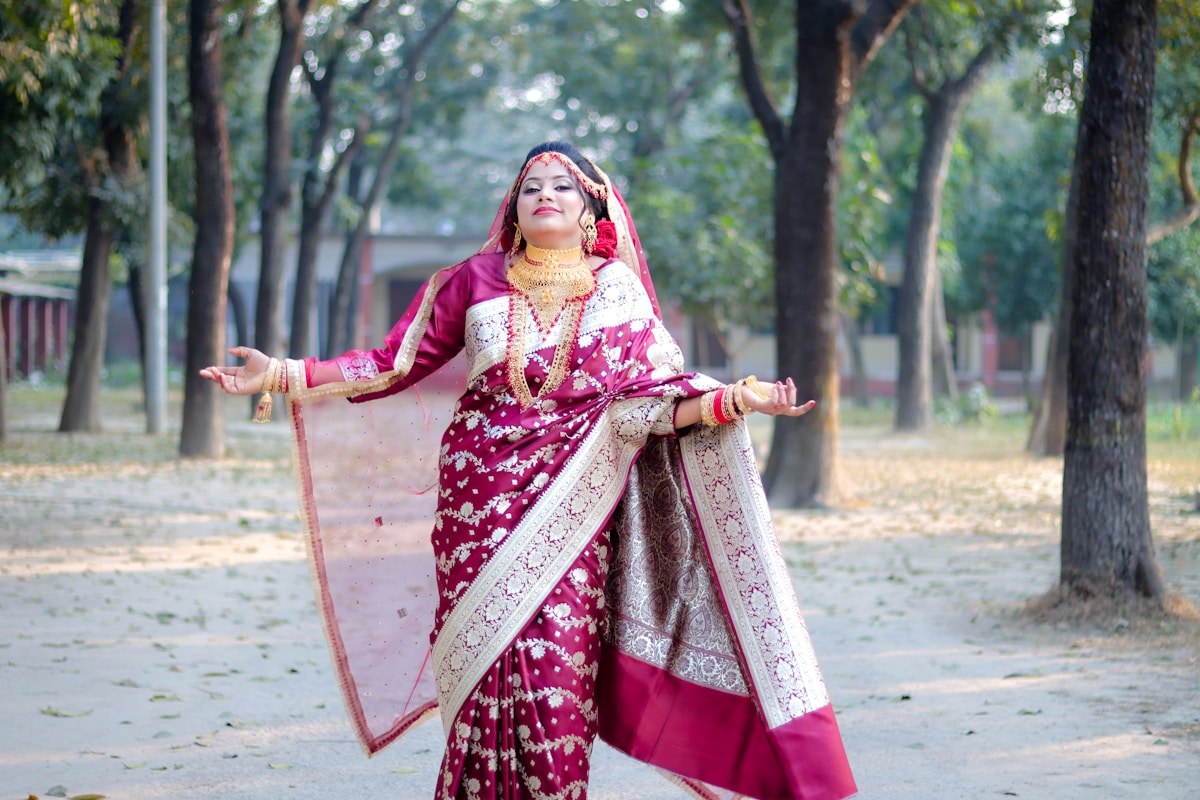
South Asian ethnic wear is one of the quietly booming categories on Etsy. Buyers in New Jersey, London, Toronto and Houston search for kurta sets for Diwali parties, lehengas for sangeet nights, and handloom sarees they cannot find in a local mall. If you run — or want to start — an Etsy shop selling Indian ethnic wear from the US or UK, you have a real advantage: you understand both the garments and the buyers.
What most diaspora sellers do not have is a way to photograph those garments properly. And on Etsy, the first photo decides the click.
The Diaspora Seller's Photo Problem
The typical setup looks like this: your inventory comes from a supplier or family workshop in India, your customers are in the US or UK, and your "product photography" is whatever the supplier sent — a garment folded on a bedsheet, a mannequin shot under tube light, or someone else's watermarked catalog image. None of those wins an Etsy search result against a competitor whose listing leads with a clean on-model photo.
The traditional fix does not price out. A US studio photoshoot starts around $300-500 for a small session before model fees, and a model comfortable draping a saree correctly is genuinely hard to find outside a few metro areas. UK rates are comparable. For a shop with 30 listings and Etsy margins, that math never closes — which is why so many ethnic wear shops stay stuck on flat-lay photos.
What Etsy Expects from Your Listing Photos
Etsy's requirements are looser than the big marketplaces, but its search rewards complete galleries. The essentials:
| Requirement | What to Do |
|---|---|
| Resolution | At least 2000px on the shortest side so zoom stays sharp |
| Thumbnail ratio | Around 4:3 crops cleanly in search results |
| Photo slots | 10 per listing — full galleries convert best |
| First photo | The on-model shot; it decides the click |
| Backgrounds | No white-background rule — lifestyle scenes are welcome |
For the full specification breakdown and how Etsy's rules compare across categories, see our Etsy image requirements guide. The short version for ethnic wear: use all 10 slots, and make at least the first two on-model.
Why Generic AI Tools Fail on Ethnic Wear
The obvious modern answer is AI-generated model photos — and for Western garments, most tools do a passable job. Ethnic wear is where they break. In our own comparison testing, popular Western try-on tools rendered a kurti as a maxi dress, ignored the dupatta entirely, and turned a saree into an approximate wrap gown. The garment in the output was not the garment in the input.
That happens because these models are trained overwhelmingly on Western fashion. They have seen a million sundresses and very few pallu drapes. When the AI meets an unfamiliar construction, it substitutes the nearest Western silhouette — which for a seller is worse than no photo at all, because the buyer receives something different from the listing.
What to look for in a tool if your shop sells South Asian garments:
- Garment-type awareness: the tool should know a saree, kurti, lehenga, anarkali and kurta set are different constructions, not "dress variants". CatalogX handles these as first-class garment types — see how it renders saree pleats and pallu specifically.
- Detail fidelity: zari borders, mirror work, block prints and embroidery must land exactly where they are on the real piece. On handmade items this is the whole value of the listing.
- Model diversity: your buyers want to see the garment on models who look like them. A library that includes South Asian models is not a nice-to-have for this category.
- Nothing invented: a plain kurta must stay plain. Tools that "beautify" garments create returns and policy risk.
The Workflow: From Supplier Photo to Etsy Listing
Here is the workflow diaspora sellers use with CatalogX, end to end:
- Get one clean garment photo. A flat-lay on a plain surface or the supplier's catalog shot both work. Tags, hangers and pins are removed automatically. If you sell sarees, our guide on photographing sarees and kurtas without a model covers how to frame the borders and pallu in one shot.
- Pick a model and scene. Choose from 40+ models across skin tones — including South Asian models your buyers recognize themselves in — and 50+ backgrounds, from studio-clean to festive settings that suit occasion wear.
- Generate the listing set. The ecommerce pack produces front, angled and detail shots from one upload, enough to fill Etsy's 10 slots with a coherent gallery. Keep the same model across listings so your shop page reads like one brand.
- Add close-ups. Use your real macro shots of embroidery and border work in the remaining slots — handmade buyers zoom in, and real craft detail photographed up close is your best trust signal.
- List the same day. New stock from your supplier can be photographed, generated and listed before the weekend market you were saving it for.
Upload a kurti, saree or lehenga photo and get an on-model shot in about 30 seconds. 5 free credits, no card needed.
Try Free Now →
Pricing Your Listings for US and UK Buyers
One consequence of better photos deserves its own paragraph: they let you price correctly. Diaspora buyers on Etsy are not comparison-shopping against wholesale prices in India — they are comparing against local boutiques and the cost of a trip home. A hand-embroidered kurta set with professional on-model photos supports a Western price point; the same garment on a bedsheet photo does not. Sellers consistently underprice ethnic wear on Etsy because their photos look wholesale even when their product is boutique.
The photo investment side of that equation is now small. Instead of a $300+ session per batch of inventory, AI generation prices per image — see CatalogX pricing — and re-generating a listing photo for a new colorway or festive season costs one credit, not a rebooked shoot. For the full cost comparison in a US context, read our AI vs studio photoshoot cost breakdown for US sellers.
Beyond Etsy: Where Else These Photos Work
The same generated set serves every channel diaspora sellers actually use:
- Instagram and WhatsApp: where most diaspora boutique discovery happens — consistent model photos make your grid look like a label, not a reseller.
- Your own Shopify store: once Etsy fees start to bite, the photo library moves with you. See the Shopify image guide.
- eBay: for pre-owned and vintage pieces — the eBay photo requirements differ from Etsy's, but the on-model shots carry over.
- Occasion marketing: Diwali, Eid, Navratri and wedding-season posts need the garment in a festive scene — a background swap, not a reshoot.
The sellers winning this category in 2026 are not the ones with the best supplier — supplier access is increasingly common. They are the ones whose listings look like a brand. For a small shop run from a spare room in Edison or East Ham, photography used to be the wall between those two things. It is not anymore.